
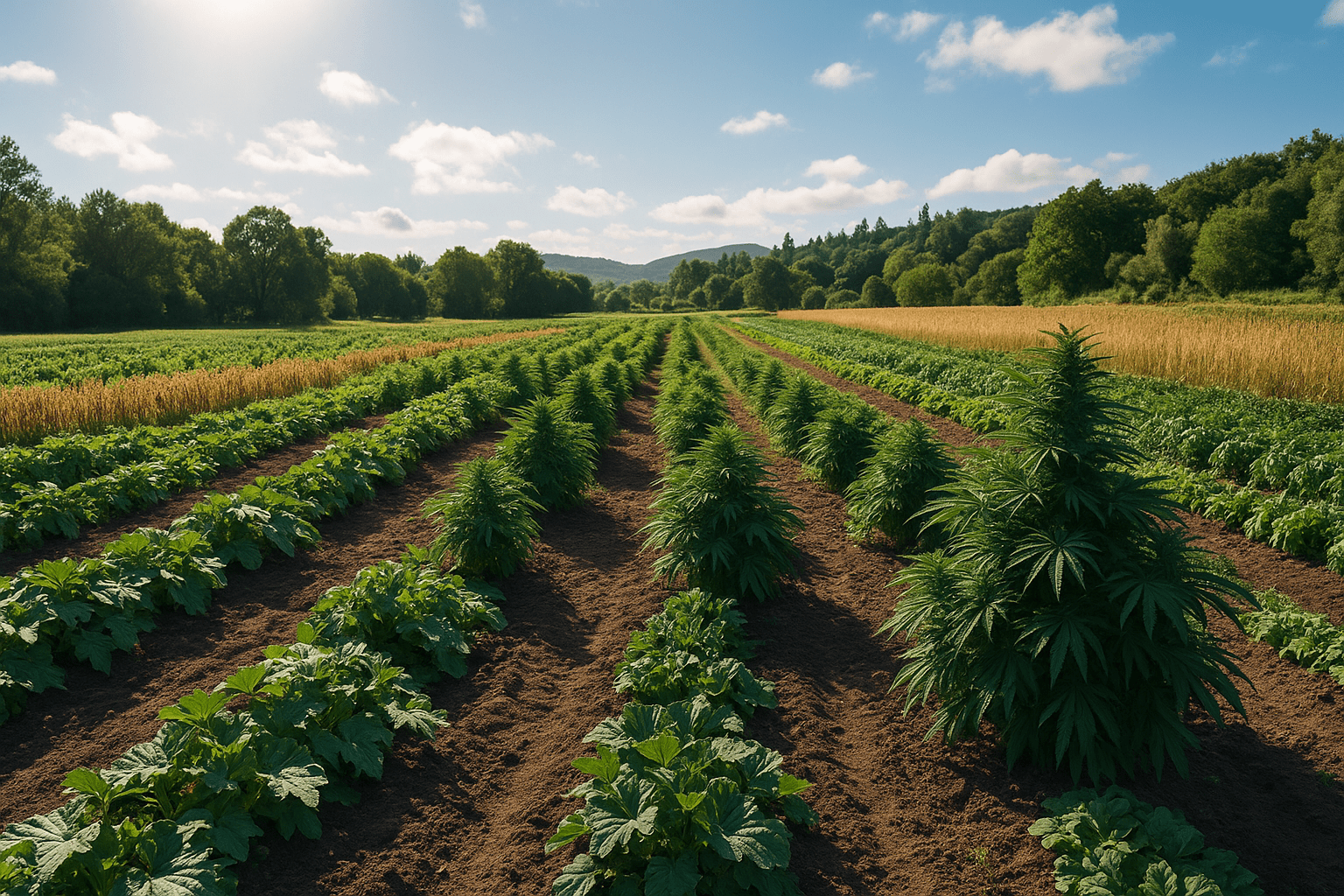
Walking into a cannabis grow operation that embraces crop rotation reveals more than just rows of plants. It tells a story of a shifting mindset, where the convenience of monoculture is gradually giving way to methods shaped by long-term care for the soil and the environment. Crop rotation is an age-old agricultural practice, but its application in cannabis cultivation has only recently gained attention as sustainability becomes a driving factor for many growers.
The balancing act of soil and cannabis
Many cannabis cultivators, especially those working outdoors or in soil-based greenhouses, confront a persistent challenge: soil fatigue. Growing cannabis repeatedly in the same ground can deplete key nutrients and disrupt the balance of beneficial microbes. This leaves plants more vulnerable to stress and disease. Crop rotation, in its simplest form, involves alternating cannabis with other plants to give the soil a chance to recover or even improve.
In the context of sustainability, this is more than just a way to avoid nutrient depletion. It is about nurturing a living ecosystem beneath the plants. Introducing legumes, for example, which are often hailed for their nitrogen-fixing abilities, can enrich the soil. Other crops might break pest and disease cycles that otherwise thrive when cannabis is grown exclusively year after year.
This ecological approach mirrors traditional farming wisdom but is adapted to cannabis’ unique needs. Enthusiasts and seasoned growers alike are starting to ask how choosing the right rotation crops can subtly influence the final cannabis quality, from terpene profiles to yield consistency.
Shifting patterns in rotation crops and methods
It is curious to see which plants are becoming popular rotation partners for cannabis. Cover crops such as clover and vetch have long been used in agriculture, but cannabis growers are now blending these with more tailored options. Buckwheat is gaining traction due to its ability to suppress weeds and support pollinators, which indirectly benefits the ecosystem around the cannabis crop. Other growers consider rotational vegetables or herbs, seeking diversity both in the soil and in microclimate effects.
Some who transitioned from monoculture talk about mixing in brassicas or even certain grains. Each choice brings its own interaction with soil biology or pest dynamics. The selection often depends on the grower’s specific goals, whether combating a recurring pest outbreak or aiming to improve water retention in the soil after dormant periods. What stands out is the marked intent to shift from cannabis-centered cycles toward more polycultural rotations, underscoring a broader awareness of agricultural health.
Not all these experiments are equally documented, and the cannabis industry has yet to build a robust knowledge base like those established for staple crops. We see a parallel push in research within states and universities trying to understand how cannabis fits into rotation systems and what its long-term effects are on soil health compared to other crops.
Economic and regulatory contexts shape choices
One can’t ignore how economic pressures steer crop rotation decisions. Cannabis is a high-value crop, and many growers face the temptation to maximize immediate yields, sometimes overlooking soil improvement strategies that pay off more slowly. Despite this, there is a void being filled by growers who recognize that sustainable practices, including well-planned rotations, can reduce costs related to fertilizers, pesticides, and soil amendments in the long run.
Meanwhile, some regions with evolving regulatory frameworks now encourage or require environmental stewardship that indirectly promotes thoughtful crop rotation. For example, California has guidelines for sustainable cannabis farming that highlight soil conservation and integrated pest management, pushing producers to consider rotations not just as experimental, but as integral to compliance and market differentiation.
This interplay between regulation, economics, and sustainability goals creates a complex environment where crop rotation takes on multiple roles. It can be part of certification processes like organic or regenerative cannabis, which appeal to particular market segments and, in doing so, influence growers’ cultivation methods.
Observing outcomes and unresolved questions
Reports from cultivators experimenting with crop rotation reveal mixed but promising results. Healthier soils tend to manifest in fewer pest problems and more resilient plants through seasonal stresses. These benefits sometimes translate to higher-quality yields, although defining quality beyond the usual lab testing is a subtle art shaped by both experience and consumer feedback.
That said, there is no universal rotation plan that applies across climates and cultivation styles. Indoor growers reliant on hydroponics or soilless media face a different set of considerations, where crop rotation for soil health becomes largely irrelevant. Instead, sustainability might focus on reducing water, recycling nutrients, or even rotating microbial inoculants.
Outdoor and soil-based growers continue to navigate knowledge gaps about what species work best in rotation and when to introduce them. Some advocate for longer fallow periods or green manure crops, whereas others are experimenting with multi-species mixes to mimic diverse natural systems. Anecdotal evidence often drives these decisions, underscoring the need for further study and sharing of results to build a collective understanding.
In watching this quietly evolving scene, it feels like cannabis cultivation is gradually aligning with larger agricultural trends that recognize the interconnectedness of plants, soil, and environment. Crop rotation in cannabis is not an instant fix but a layered strategy requiring patience and observation.
The sustainability story beyond rotation
While crop rotation is a useful lens into sustainable cannabis farming, it is just one factor among many. Water conservation, energy use, pest management, and waste reduction are equally urgent topics. However, rotation often acts as a visible indicator of a grower’s broader commitment to stewardship.
The trend toward rotation suggests a maturing industry open to learning from traditional farms and scientific inquiry alike. There is a subtle but growing recognition that cannabis, despite its position as a specialty crop, thrives best within healthy, living ecosystems. The plants, soil, and communities connected to cultivation all stand to benefit from this unfolding dynamic.
Moving forward, growers and researchers face exciting opportunities to deepen understanding and refine practices that intersect with sustainability goals. Observing these shifts provides insight into how cannabis farming might develop in ways that respect both the environment and the crop’s potential.
As the cannabis industry grows and evolves, watching the adoption and adaptation of crop rotation reveals much about ongoing priorities, challenges, and hopes for a more sustainable future in cultivation.
Sources and Helpful Links
- USDA Natural Resources Conservation Service – An extensive resource on crop rotation principles and soil conservation practices.
- University of California Agriculture and Natural Resources – Research articles covering sustainable cannabis cultivation challenges.
- Regenerative Agriculture Definition – A hub explaining regenerative practices including crop rotation related to soil health.
- NCBI Study on Crop Rotation Effects – A peer-reviewed paper examining crop rotation impact on pest management and soil quality.