
Growing cannabis has always been an art informed by close observation and hands-on experience. Taking care of these plants means noticing small cues that could signal a problem, often before they become apparent. Over the past few years, new technology has quietly shifted how growers catch those early signs by allowing them to monitor plants without touching them. This wave of non-invasive monitoring feels like a subtle revolution, offering insights that were rarely possible before in everyday cultivation.
Invisible clues beneath the surface of the plant
Anyone who has grown cannabis knows that stress is not always obvious at first glance. Wilting or discolored leaves appear after damage has started, making it harder to save the crop. Sensors that measure leaf temperature, light reflectance, and other physiological traits open a window into those hidden warning signs. For example, thermal imaging can pick up spots where the leaf temperature is higher because the plant is struggling to transpire, a common stress response to drought or disease.
Similarly, spectral imaging highlights subtle changes in pigment that hint at nutrient imbalances long before leaves yellow or curl. These signals often occur days before traditional visual signs. That extra lead time enables growers to intervene with watering adjustments or nutrient tuning, preserving plant vigor and, ultimately, the harvest’s quality.
A steady gaze that does not disturb the plant
In the past, growers checked plants by hand and eye repeatedly throughout the day, balancing the risk of stressing the plant by overhandling it with the need for timely information. Sensor technology turns this approach inside out. Devices can continuously gather data without interfering with the natural environment, capturing conditions as they evolve in real time. This is far from just a fancy gadget; it means monitoring is happening in a way that is gentle on the plant and delivers steady updates that humans alone can miss in busy grows.
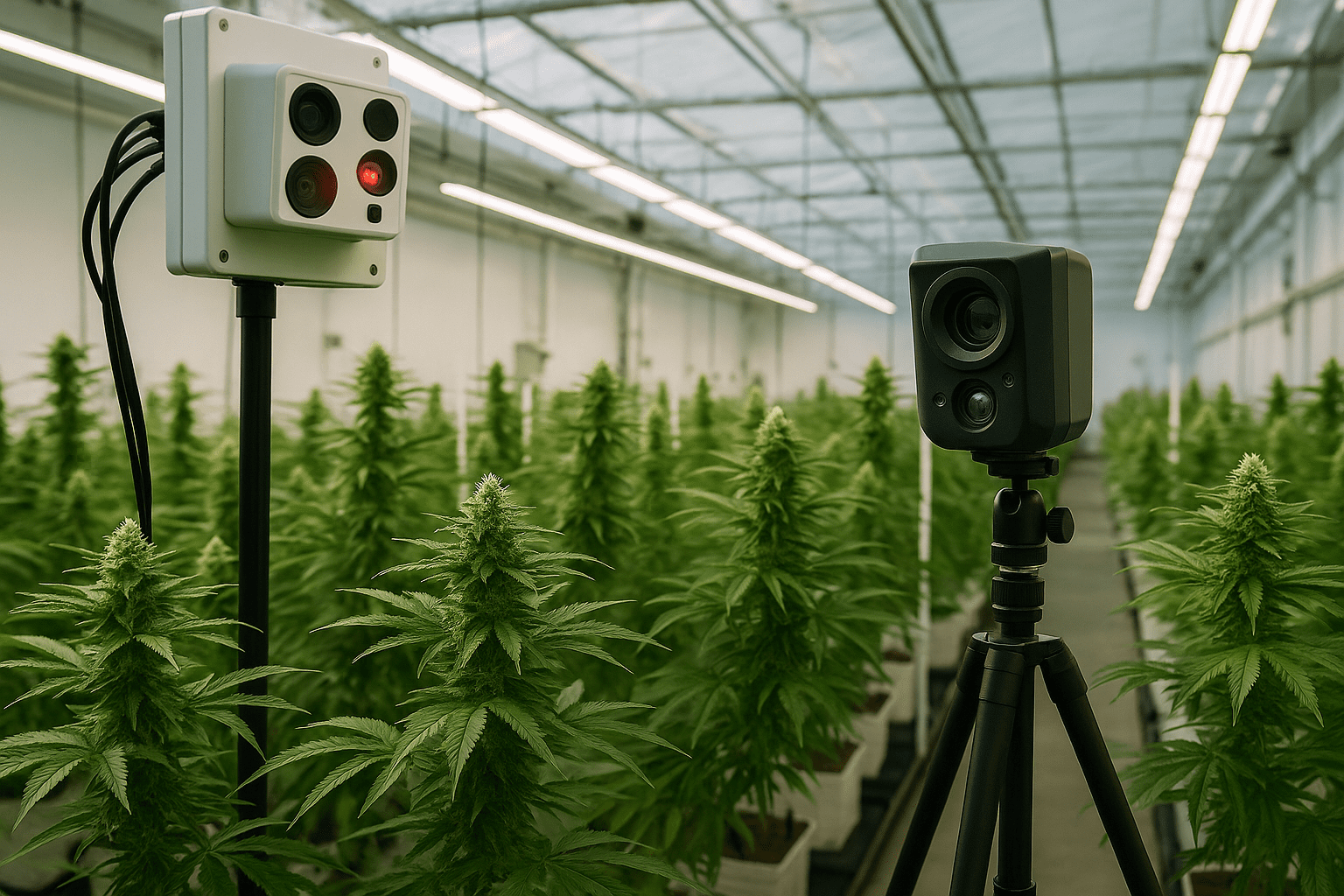
This unobtrusive monitoring includes tools such as environmental sensors tracking humidity and temperature near the canopy, alongside cameras that assess how leaf surfaces reflect light at various wavelengths. Each type of measurement builds a more complete picture of plant health, revealing how the cannabis reacts to heat, moisture, and nutrient changes without a finger laying on any leaf.
Turning data into decisions remains a frontier
Gathering all this digital detail poses an obvious challenge: what to do with it once it is collected. The raw numbers and images are intriguing, but without context, they can feel like a puzzle missing key pieces. Translating sensor data into practical advice is where AI-powered platforms and user-friendly apps have started making strides. Many growers are finding value in dashboards that spotlight trends or sudden changes that warrant attention.
In one example, a slight, sustained rise in leaf temperature on a particular section could push a grower to check irrigation for blockages or tweak ventilation to cool the environment. Those quick interventions can prevent heat stress from causing irreversible damage. Yet, much of this relies on each grower learning how to interpret patterns specific to their strains, setups, and climates. It’s not plug-and-play but rather a new skillset layered on top of traditional grower intuition.
Obstacles in adapting new technology to varied grow environments
Despite promising outcomes, several hurdles remain. Cannabis plants differ widely in their responses depending on genetic and environmental factors, so sensors have to be calibrated carefully. The cost of reliable, high-end equipment can still restrict its use to larger-scale operations, although prices are gradually coming down as the market matures.
Another difficulty lies in the sheer volume of data. A steady stream from multiple sensors quickly adds up. Growers without filtering tools may feel overwhelmed rather than better informed. Moreover, environmental variations between indoor and outdoor grows, different soil media, and lighting setups make it hard to establish universal benchmarks for stress signals. What constitutes a problem in one grow might be perfectly normal in another.
A future shaped by a blend of tech and traditional craft
What stands out from conversations with growers experimenting with non-invasive monitoring is a growing respect for the technology as an extension of observation, not a replacement. These tools help to refine the art, allowing for earlier and more nuanced insights into plant well-being. They invite a more proactive approach, one where preventing stress replaces reacting to visible signs.
As the technology becomes more affordable and accessible, along with ongoing research that clarifies sensor readings and plant responses, non-invasive monitoring could become standard practice. In this new landscape, growers gain reassurance knowing they can catch stressors early, whether caused by temperature swings, hydration imbalances, or nutrient availability. It makes caring for cannabis feel more like a steady conversation than a scramble when things go wrong.
For those interested in delving deeper into non-invasive monitoring science, resources like the University of New Hampshire Extension provide detailed information tailored to cannabis cultivation. Industry publications such as Cannabis Business Times offer ongoing coverage of innovations. Meanwhile, communities like Growers Network share practical experiences from everyday cultivators navigating these evolving tools.
Staying attentive to the quiet progress of non-invasive cannabis plant monitoring reveals an ongoing blending of nature’s rhythms and modern technology. It is a gentle advance that promises more resilient crops and a more informed connection between grower and plant.
Sources and Helpful Links
- University of New Hampshire Extension – Overview of non-invasive plant monitoring methods tailored for cannabis
- Cannabis Business Times – Industry insights into sensor technologies improving cannabis cultivation
- Growers Network – Community and resources for cannabis cultivators sharing practical experiences