
When cannabis cultivators talk about improving their soil’s health, biochar keeps coming up in conversations. This carbon-rich soil amendment derived from biomass has attracted curiosity for its potential to boost soil fertility, water retention, and microbial activity. But how exactly cannabis responds to biochar addition is still a work in progress, shaped heavily by who is experimenting, under what conditions, and with which specific techniques.
The push and pull of biochar’s role in cannabis soil
Biochar is not some new magic ingredient. Its use dates back centuries in places like the Amazon, where terra preta soils show rich organic carbon and enhanced crop productivity. For modern cannabis growers, biochar is appealing because it offers a potentially sustainable way to improve soil quality without relying solely on synthetic fertilizers or expensive organic inputs.
Some growers report that adding biochar seems to encourage more vigorous plant growth and better root health. Others note that biochar can help soils retain moisture longer, potentially easing the frequency of watering. But results are far from uniform. The difference can sometimes boil down to how the biochar was made, what feedstock it came from, and even particle size. For instance, wood-based biochars tend to have different properties than those made from agricultural residues or nutshells.
It is also worth mentioning that biochar’s effects take time to unfold. Unlike fast-release fertilizers, biochar works more subtly over weeks and months, mainly by creating a more hospitable environment for beneficial microbes and improving nutrient cycling.
Observations from growers diving into biochar blends
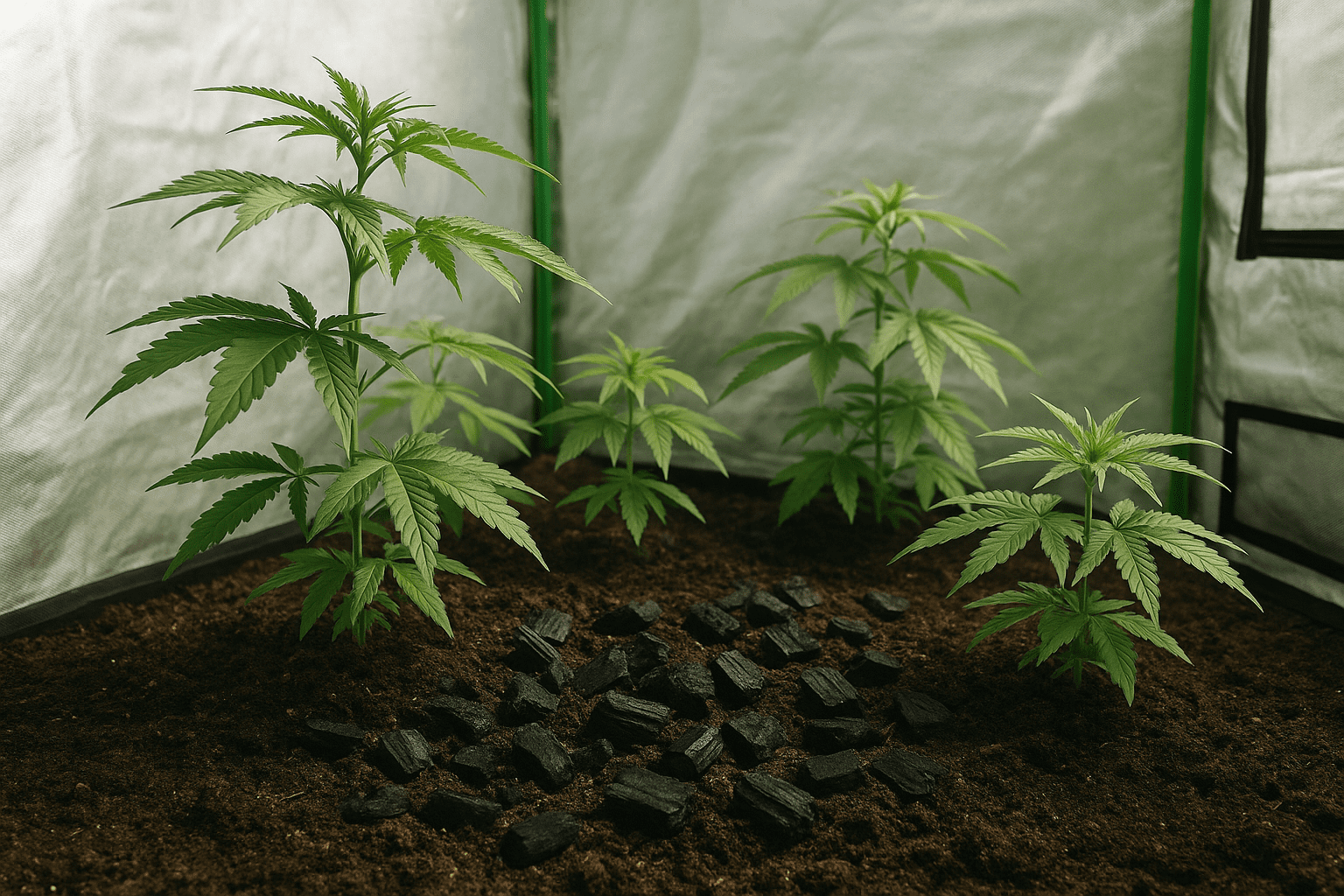
Growers who have layered biochar into their cannabis soils often describe early surprises. Some have noted initial nitrogen lock-up, a common phenomenon where biochar can temporarily tie up nitrogen, causing slower early growth. These growers often found that pre-charging biochar with compost tea or organic nutrients beforehand eased this effect.
Others highlight the enhanced smell and flavor profiles of their cannabis crops from biochar-amended soils, attributing it to improved microbial diversity. While such sensory claims are subjective, they underscore the intimate connection between soil life and plant chemistry.
At the same time, some cautionary voices tell us that biochar is not a cure-all. Depending on the amount used and the existing soil condition, biochar could sometimes dry out the soil faster or cause excess alkalinity. An experienced grower observed that mixing biochar at rates above 10% of soil volume started to show diminishing returns, occasionally stressing plants rather than helping them.
The science exploring biochar’s influence on cannabis physiology
Scientific studies remain patchy but intriguing. Researchers from agricultural universities experimenting with cannabis and biochar combinations have documented shifts in soil microbial communities, including increases in beneficial bacteria and fungi known to enhance nutrient uptake and disease resistance.
One study published related to plant responses noted improved root biomass and sometimes greater cannabinoid concentration with biochar application. However, the variability across trials suggests that biochar’s real-world impact depends on how well its characteristics match the existing environment, such as soil pH and organic matter content.
Another interesting angle involves biochar’s water-holding capacity, which may reduce drought stress during critical growth phases for cannabis. However, this benefit is sometimes offset by biochar’s potential to cause hydrophobic soil conditions if not properly integrated or hydrated.
Context matters: Practices shaping biochar outcomes
The way biochar is added to cannabis soils appears almost as important as what type is chosen. Many growers emphasize the value of inoculating biochar with nutrients or beneficial microbes before mixing it into substrates. This preconditioning can help jump-start the biological processes biochar aims to support.
Mixing biochar with compost or vermicompost adds layers of organic matter that buffer plant roots from direct contact with the charcoal particles, which can sometimes adsorb nutrients excessively when applied alone. This practice also creates a more balanced soil ecosystem that supports both aerobic microbes and fungi.
Some gardens opt for side-dressing biochar into raised beds rather than mixing it thoroughly, which allows more controlled dosing and gradual integration over the growing cycle. Others incorporate biochar into coco coir or soilless mixes, reporting differences in water retention and overall texture.
Temperature, watering routine, and cannabis genetics also appear to interact in subtle ways with biochar amendments. For example, genetics known for dense root systems and strong microbial relationships might benefit more from biochar’s microbial habitat enhancements.
All these experiences underline a simple truth: biochar is not a one-size-fits-all solution but part of a larger, more dynamic soil health story.
What lies ahead in understanding biochar and cannabis cultivation
As more growers share experiences and researchers deepen their inquiries, the puzzle pieces about biochar’s role in cannabis growing will likely fall into place more clearly. An emerging focus is on the long-term effects, such as whether biochar can rebalance depleted soils or reduce reliance on synthetic inputs sustainably.
It is also important to balance enthusiasm with realistic expectations. Some growers might find better, more immediate results from traditional soil amendments while they develop an intuition for how biochar fits into their unique setups.
Steady experimentation combined with careful observation is key. Tracking plant growth details, leaf coloration, flowering behavior, and soil condition over multiple cycles can provide invaluable insight. What seems clear is that biochar’s potential lies not just in chemistry but in the ecology it helps nurture beneath the surface.
In the meantime, collaborative platforms and grower forums are valuable spaces where those curious can discuss trial results, sources of biochar, and innovative blending approaches. This real-world knowledge sharing may turn out to be as important as the formal scientific papers for advancing cannabis biochar applications.
This ongoing journey shows how cannabis cultivation blends science, craft, and observation into an evolving practice where materials like biochar offer new ways to understand and shape plant health and crop quality.
For growers considering biochar, patience and incremental application, along with attending to soil life, might bring out the most rewarding benefits over time.
It is a reminder that cannabis cultivation remains a hands-on ecology, where small changes can ripple into complex, beneficial outcomes or unexpected challenges that invite another look.
Those who take the time to observe quietly and adjust thoughtfully will keep uncovering what biochar and cannabis can teach one another.
For further reading about biochar properties and cannabis soil health, sources like the Penn State Extension and scientific articles on biochar and soil microbiomes offer grounded perspectives. Growers can also explore Maximum Yield’s overview of biochar for a commercial cultivation view that balances enthusiasm with practical realities.
Understanding cannabis and biochar is a conversation that will unfold over seasons, but its promise as part of a rich, live soil strategy is already clear from many growers’ experiences.
Sources and Helpful Links
- Penn State Extension on Biochar – practical guidance on how biochar can improve soil health in various crops
- NCBI article on Biochar and Soil Microbiomes – a detailed look at biochar’s impact on soil microbial ecology
- Maximum Yield: Biochar Overview – commercial cultivation perspectives and practical applications of biochar