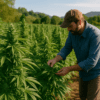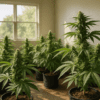

As more regions experience longer outdoor growing seasons due to shifting climate patterns or simply geographic advantages, cannabis growers and enthusiasts alike are noticing how these changes can alter plant behavior in fascinating ways. Cannabis, a plant quite sensitive to its environment, offers a natural window into how subtle variations in climate, daylight, and outdoor exposure impact growth, flowering, and overall plant health.
Stretching the Growing Season and Its Unexpected Tensions
Where I live, the outdoor growing season typically falls into a well-known rhythm. There is a natural timeline when cannabis starts its growth phase linked closely to the length of daylight, with flowering kicking in as the days shorten. But when the warm period stretches longer than usual, that rhythm can wobble. Plants facing extended daylight can hang on in vegetative growth, seemingly uncertain when to switch gears. This can cause confusion for growers expecting a standard flowering timeline.
In regions with less pronounced seasonal changes, like parts of the Mediterranean coast or certain inland valleys, extended growing seasons often mean cannabis plants can mature more fully or even produce additional harvests if conditions remain stable. In contrast, in northern latitudes where summer days seem endless and then abruptly shorten, plants may exhibit stress when the transition is delayed or arrives unevenly.
Local Climate Shapes Plant Timing and Structure
More than just day length, the interplay of temperature, humidity, and even altitude adds layers of complexity. Warmer nighttime temperatures during an extended season might accelerate growth or increase resin production, but inconsistent temperatures could provoke issues like hermaphroditism, where the plant produces both male and female flowers, complicating cultivation.
Growers working in arid, sun-drenched areas often report that their outdoor plants develop tighter bud structures, potentially tied to stress from heat and water scarcity. On the other hand, those in more humid, temperate areas might see looser, airier flower formations because the plant’s physiology adapts to reduce mold risk.
The Dance of Daylight and the Plant’s Internal Clock
Cannabis plants rely heavily on light cues to trigger flowering, but the mechanism is not purely about total sunlight hours. It’s the pattern of light and dark that seems critical. In some northern regions with very long days during summer months, this can delay the flowering signal that a consistent dark period usually provides. Plants might keep stretching without flowering, or begin flowering unevenly among lower branches.
In contrast, areas closer to the equator experience a more balanced day-night cycle year-round. Here, cannabis plants tend to have more predictable flowering patterns, but when the outdoor season extends unexpectedly, those patterns can shift. For instance, a strain adapted to a 12-hour night in fall might struggle if nights don’t get dark enough for long enough during a prolonged summer.
Variety and Genetics Meet Environment
Different cannabis strains react uniquely to these growing season nuances. Some landrace varieties that evolved in stable, consistent climates demonstrate robust flowering responses even with shifting daylight lengths. Hybrid strains bred for indoor cultivation might show sensitivity when exposed to irregular outdoor cycles, sometimes delaying or fragmenting flowering in ways unfamiliar to growers.
This suggests a practical consideration for cultivating cannabis outdoors in regions with changing or extended seasons: selecting strains with genetic backgrounds suited for local conditions or that have demonstrated stability in longer light regimes.
There is a growing body of anecdotal evidence from cultivators who experiment with outdoor grows in extended seasons. Observations suggest that adjusting watering, pruning, and nutrient schedules may help cannabis plants navigate the stresses associated with prolonged vegetative phases or delayed flowering onset.
Looking Beyond the Traditional Season Framework
Traditional cannabis cultivation advice often revolves around fixed planting and harvesting dates tied to expected seasons. As climate conditions evolve and growers push boundaries with extended outdoor seasons, this framework feels increasingly limiting. Plants respond in ways beyond calendar expectations, underscoring the need to pay attention to environmental cues more than any fixed schedule.
Some growers find success by embracing the unpredictability, allowing plants to follow their internal rhythms while managing care dynamically. Others adopt supplemental lighting or shading techniques outdoors to mimic more stable day length cycles. Both approaches speak to a larger truth: cannabis cultivation outside requires a degree of fluidity and attentiveness, especially when seasons refuse to conform.
Regions offering extended outdoor growing seasons invite growers to think beyond the standard growth cycles. They open space to experiment and witness how cannabis adapts, revealing nuances of its biology often hidden in more fixed environments. For many, this process enriches the understanding of the plant far beyond what a typical season might offer.
As these patterns continue to emerge, it will be interesting to see how hybrid vigor, local varieties, and grower ingenuity combine to shape cannabis cultivation across climates with lengthened outdoor windows. The ongoing shift in outdoor growing seasons might not only change harvest calendars but could influence quality, cannabinoid profiles, and plant resilience in unexpectedly complex ways.
For those watching cannabis grow under expanding skies, the plant’s evolving story offers a reminder that cultivation is as much about observing and adapting as following recipes or timelines. With new chapters unfolding region by region, the dialogue between plant and environment grows ever more intricate and rewarding.
Exploring these phenomena unveils layers of cannabis biology tied to place and season that feel both ancient and urgently contemporary. It’s a living dialog that growers, scientists, and enthusiasts will keep unraveling one season at a time.
More detailed insights into photoperiodism and cannabis flowering cues are available at the University of Vermont Extension on photoperiod and cannabis. For a broader perspective on how climate shapes plant cycles, the NASA climate crop cycle research adds useful context. To connect real-world grower experiences, the Grow Weed Easy community insights provide stories from various regions navigating extended seasons. Finally, for practical considerations on strain selection in diverse environments, the Leafly’s coverage of landrace cannabis offers background on genetics tuned to local climates.
Sources and Helpful Links
- University of Vermont Extension on photoperiod and cannabis – Details on how daylight patterns influence cannabis growth phases.
- NASA research on climate and crop cycles – Insights into climate impact on plant seasonality and crop timing.
- Grow Weed Easy community insights – Real-world grower experiences with outdoor seasons from diverse regions.
- Leafly’s landrace cannabis overview – Exploration of cannabis genetics adapted to regional climates.