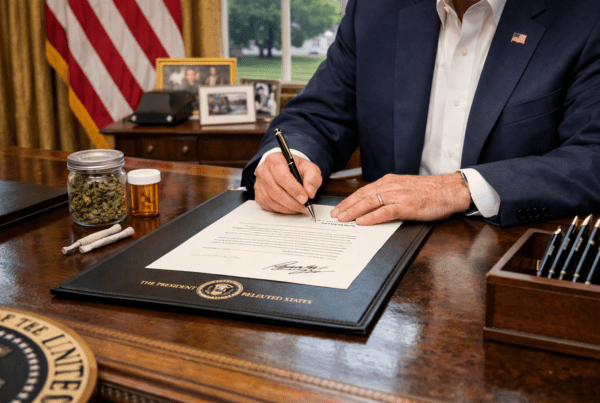


Federal cannabis enforcement has long existed in a complex tension with state laws that increasingly allow some form of legal cannabis commerce. The most recent spate of enforcement efforts reveals new wrinkles, especially affecting businesses that cross state or national borders where legal conditions vary sharply.
Businesses working within states that have legalized adult-use or medicinal cannabis face a generally understood risk, often mitigated by local oversight and state-level protections. Things become more complicated when these companies have activities extending beyond one jurisdiction. Transporting cannabis products or related money through or into areas where marijuana remains federally illegal raises distinct, unpredictable enforcement questions.
This unsettled dynamic caught the attention of various stakeholders when reports surfaced about increased federal seizures and prosecutions targeting cross-border cannabis operations. These actions underscore a persistent federal resistance to normalizing cannabis commerce at the national level, even as many states continue to carve out legal frameworks. The tension plays out in courts, customs checkpoints, and financial transactions, revealing how federal policies have not adapted uniformly to evolving state cannabis laws.
Crossing Borders Brings Tangible Risks
For cannabis businesses, crossing state or international lines means encountering legal environments that may not recognize or permit any form of cannabis activity. The federal government’s classification of cannabis as a Schedule I controlled substance remains unchanged, which legally prohibits shipping cannabis products between states or countries even if both places allow cannabis in their local systems.
This reality is stark for operators who may be perfectly compliant under their home state regulations. When products are moved beyond those borders, federal statutes technically apply, opening the door to federal enforcement actions. The concern is not hypothetical. Law enforcement agencies have demonstrated an interest in examining cross-border transactions to identify possible trafficking or money laundering violations tied to cannabis enterprises.
Increased surveillance and tightened customs enforcement create hurdles that complicate supply chains and financial flows. The risk extends not only to the physical products but also to currency moving across borders due to limited banking access, which remains an ongoing challenge for cannabis companies. This can lead to seizures of cash, vehicles, or goods, and also to federal investigations that can tie up business operations and assets for long stretches.
A Look at Recent Federal Moves
Recent federal actions include targeted raids and seizures in key states, highlighting a sharpened focus on interstate and international cannabis activity. These investigations have sometimes involved coordination between federal agencies such as the Department of Justice and Customs and Border Protection, indicating a multifaceted approach to enforcement.
While the Justice Department’s priorities have oscillated with different administrations, the underlying legal framework has remained restrictive. Recently, some signals suggest heightened enforcement in border regions or transportation corridors commonly used by cannabis businesses. Such enforcement actions send a clear message that crossing jurisdictional boundaries with cannabis products or proceeds remains a risky endeavor.
These developments coincide with ongoing federal legislative efforts that aim to clarify cannabis’s legal status or to establish protections for state-legal businesses, including those crossing borders in certain cases. However, until such federal reforms are enacted, the legal ambiguity persists, leaving businesses vulnerable to variable enforcement depending on geography and circumstance.
Financial Quagmires and Banking Challenges
The intersection of federal enforcement with financial regulations compounds the challenges facing cross-border cannabis businesses. Since cannabis remains federally illegal, many banks and financial institutions refuse to handle cannabis-related funds, leading to a heavy reliance on cash. Moving cash across state or international lines raises alert signals under money laundering laws and invites federal scrutiny.
Without clear federal protections, businesses face a catch-22: they cannot use most traditional banking services to manage their funds safely, yet transporting physical cash creates exposure to seizures or legal challenges. The SAFE Banking Act and other legislative proposals have repeatedly stalled in Congress, and progress toward resolving these financial issues has been uneven.
This environment encourages some cannabis operators to explore alternative financial methods, including cryptocurrency or locally confined operations to minimize risk. Yet such workarounds often come with logistical hurdles and regulatory uncertainty of their own.
The Impact on Business Strategy and Industry Movement
Given these complexities, cannabis entrepreneurs targeting multi-state or international growth must weigh legal risks more carefully than ever. Companies often adjust their strategies by focusing on vertical integration within a single state or by forming partnerships that keep product movement strictly within known legal boundaries.
The federal enforcement focus on cross-border activities also affects supply chain decisions. Some businesses invest in local cultivation or manufacturing to avoid transport risks, while others shift to ancillary services like technology or consulting where legal exposure can be lower.
Industry observers note that these enforcement realities incentivize a patchwork of cautious, localized models rather than broad expansion. This fragmentation slows the formation of a unified national cannabis market, leaving businesses to navigate a maze of legal traps shaped by federal inaction and inconsistent policies.
These patterns contribute to a landscape where prudent operators remain vigilant about federal policies and enforcement trends. Understanding federal enforcement logics and staying informed of interagency activity can make the difference between sustainable growth and costly legal challenges.
Despite the obstacles, the persistent interest in federal cannabis reform indicates that these cross-border enforcement tensions may evolve in the coming years. Meanwhile, businesses must adapt within an environment marked by uneven enforcement and persistent legal uncertainties.
Anyone involved with cannabis commerce that crosses jurisdictional boundaries should keep a close watch on federal enforcement reports and legislative developments. While some states push forward with legalization, crossing those lines means stepping back into a more constrained and risk-filled legal field where federal authorities remain a definitive force.
For now, this uneven patchwork of cannabis legality and federal policy offers a clear lesson: crossing borders with cannabis carries risks rooted in the unresolved tension between state progress and federal law, a situation that continues to shape the industry’s growth and challenge its evolution.
Understanding how these enforcement actions unfold and affect practical business decisions is a crucial part of following cannabis’s ongoing negotiation with American law and policy.
More background and current updates about cannabis enforcement and industry implications are available from sources like the U.S. Department of Justice’s cannabis policy pages and Customs and Border Protection’s enforcement reports. Industry-focused news and analysis can be found at Leaf Reporter and academic resources like National Conference of State Legislatures cannabis policy overview.
Keeping pace with evolving federal enforcement will remain vital as the cannabis industry’s path continues to be shaped by shifting political and legal landscapes nationally and internationally.
Sources and Helpful Links
- U.S. Department of Justice Cannabis Policy, official updates and policy statements on cannabis enforcement nationally.
- Customs and Border Protection Cannabis Enforcement, details on monitoring and regulation at border crossings involving cannabis.
- Leaf Reporter, independent cannabis news and reporting with a focus on industry trends and enforcement.
- National Conference of State Legislatures Marijuana Overview, comprehensive state-level legal and policy information.