
Signs of Change in a Traditionally Steady Climate
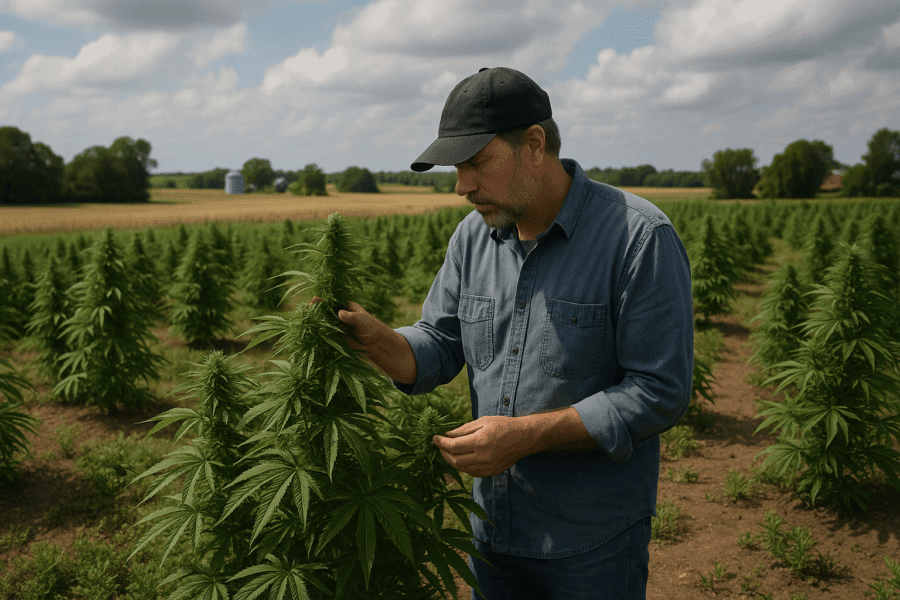
When you think of the Midwest, the picture that comes to mind is often one of black soil, endless cornfields, and seasonal rhythms that have held steady for decades. It is a region marked by distinct summers and frigid winters, which for years provided a predictable backdrop for many agricultural activities including cannabis cultivation. But recently, the patterns that growers depended on are showing cracks. The gradual shift in climate has nudged cultivators into a zone of uncertainty and experimentation.
That sense of uncertainty comes from observing subtle yet significant environmental changes. Springs arrive earlier and fall lingers, stretching the traditional growing calendar. Yet these longer seasons do not arrive without complications. Rising humidity levels and the encroachment of irregular drought cycles add layers of risk that were once rare for this region’s growers. This evolving backdrop is transforming the choices growers make about what cannabis strains to raise.
Growers who’ve worked these lands for years note that growing windows once measured in months are now measured in weeks or sometimes days less than expected due to unpredictable weather shifts. Small variations in temperature swings influence pest populations and fungal growth in ways that were not considered threats a decade ago.
Humidity’s Hidden Role Below the Surface
Humidity, often an invisible factor, has gained an outsized influence on strain decisions across the Midwest. More moisture in the air creates an inviting environment for mildew and botrytis, especially troublesome for outdoor and partially controlled environments. Historically popular strains that thrived in predictable, drier Midwestern summers are now less trusted when these fungal threats increase. The invisible enemy of moisture lurks among leaves and buds, challenging even experienced cultivators.
Growers have started favoring strains with stronger natural defenses against these moisture-related diseases, even if those strains might not have ranked highest on yield or potency in previous years. The push toward mildew resistance is also leading to a blending of genetics, borrowing from cannabis varieties native to coastal or humid zones to create hybrids adapted to Midwest challenges. These crosses often come with trade-offs such as changes in plant structure and flowering time, but resilience increasingly trumps tradition.
It is also notable that these moisture concerns are layered atop economic pressures. Mold outbreaks can decimate a crop’s market value. In some cases, growers report giving up once-favored strains because dealing with diseases became cost-prohibitive. In such a climate, selecting strains with robust defense means investing in long-term viability over immediate gains.
The Influence of Lengthening Growing Seasons
The extension of growing seasons in many Midwestern areas opens new doors for strain experimentation. Where once frost deadlines forced growers to choose quick-flowering strains, the extended warmth now invites slower, more complex genetics to come into play. This shift allows exploration of plants that develop richer terpene profiles and potentially higher cannabinoid concentrations.
Such developments have rekindled interest in Sativa-dominant strains, which naturally require longer flowering periods but offer distinct effects and flavors. Some cultivators in southern Midwest states share cautious enthusiasm for pushing these boundaries, noting that the more forgiving climate enriches the plants’ aromatic qualities. Still, the risks remain for growers farther north, where early autumn chills can arrive unexpectedly and undo months of care.
Because of these factors, growers are walking a tightrope between reaping the rewards of longer seasons and avoiding the pitfalls of frost or weather volatility. This balancing act influences not just strain selection but also planting times and harvest windows. It calls for a nuanced understanding of microclimates within a single growing region.
Furthermore, some growers report adjusting their use of greenhouses and indoor-start setups in an attempt to protect young plants from erratic temperature changes. These strategies reflect a growing sophistication in cultivation practices as climate does not behave as predictably as before.
Water Management Amid Unpredictable Supply
Water availability, a challenge present across many agricultural sectors, is becoming increasingly crucial for Midwest cannabis cultivation. Despite sporadic heavy rains, the region experiences periods of drought and drying conditions that demand attention. States have begun imposing limits on water use for agriculture, adding another layer to the resource puzzle.
To address these challenges, growers seek out strains that naturally exhibit drought tolerance or that need less frequent irrigation without sacrificing yield or quality. This pragmatic approach ties into the economic side of cultivation, where reducing water and energy inputs can determine a grow operation’s viability.
Moreover, smaller-scale growers, particularly those relying on rainwater collection or limited municipal sources, report finding greater success with strains exhibiting strong root systems that can access deeper moisture reserves. These choices often mean adapting expectations around size and output, but they increase resilience against fluctuating weather patterns.
Such strain choices highlight a slow shift in cultivation priorities: from maximizing size and potency alone to balancing environmental demands with crop reliability. This adaptation is still unfolding but could define Midwest cultivation for years to come.
Community Networks and Evolving Practices
A notable feature within the Midwestern cultivation landscape is the role of grower communities sharing data and experiences in near real time. Forums, social media groups, and local meet-ups have become critical hubs where knowledge about strain performance under shifting climatic conditions spreads quickly.
This informal collaboration allows cultivators to test new strains and cultivation techniques and get feedback on fungal resistance, water needs, flavor profiles, and harvest timing. Growers often describe this collective learning as essential to managing the complexities of climate uncertainty. What emerges is more than just a recipe for success; it is a dynamic conversation between growers and their environment.
Looking ahead, this mutual exchange of information could position the Midwest as an incubator for novel cannabis genetics shaped by environmental necessity. Breeders will likely respond with varieties fine-tuned for a blend of cold tolerance, humidity resistance, extended maturity, and water efficiency. The region’s growers may thus find themselves at the forefront of cultivating cannabis strains adaptable to climates that are no longer stable but are clearly evolving.
The importance of adaptive farming goes beyond economics and touches on cultural shifts as well. Cultivators increasingly prioritize sustainability and resilience, reflecting broader societal concerns about climate change and resource use. This mindset is infused within communities dedicated to local cannabis production, where sharing insights feels vital for collective survival and success.
In this way, the Midwest stands at a crossroads between tradition and change. While land and climate no longer behave as predictably as in the past, the human response is marked by ingenuity and collaboration. The cannabis strains chosen today will mirror the environment they grow within, and the lessons learned here may ripple into how cultivators elsewhere approach a less certain future.
For growers observing the horizon, adapting strain selection is no longer just an agronomic choice. It is a form of stewardship, an acknowledgment that plants and people must evolve together to meet the unpredictability of nature head-on.
As cannabis continues to carve its place in the Midwest, the dialogue between changing climate patterns and growers’ responses unfolds in real time, shaping both the future of cultivation and the experience of cannabis itself.
Understanding the shifting climate’s effects on strain choices means watching closely how growers blend tradition, science, and community knowledge. These choices speak to a broader story about adapting agriculture to a changing world.
Those not paying attention might miss the quiet transformations happening on farms where midwestern cannabis cultivators rewrite the rulebook not in haste or panic but with thoughtful care and steady observation.
More insights about the regional climate influence on cannabis can be appreciated through resources like the NOAA’s climate education page for the Midwest and grower discussions on Leafly’s coverage of indoor versus outdoor cannabis cultivation.
Water management strategies are also evolving as described by the Purdue Extension on irrigation management and growers consult local advisories such as the Wisconsin Department of Natural Resources water use guidelines.
These resources reflect a dynamic picture of cannabis cultivation adapting to the realities of a shifting climate rather than clinging to old assumptions.
Sources and Helpful Links
- NOAA Climate Education Midwest – An overview of climate change patterns affecting the Midwest.
- Leafly Indoor vs Outdoor Growing – Insight into challenges of growing cannabis in varying environments.
- Purdue Extension Irrigation Management – Guidance on water management for agriculture including cannabis.
- Wisconsin DNR Water Use Guidelines – Regional water use policies impacting growers.