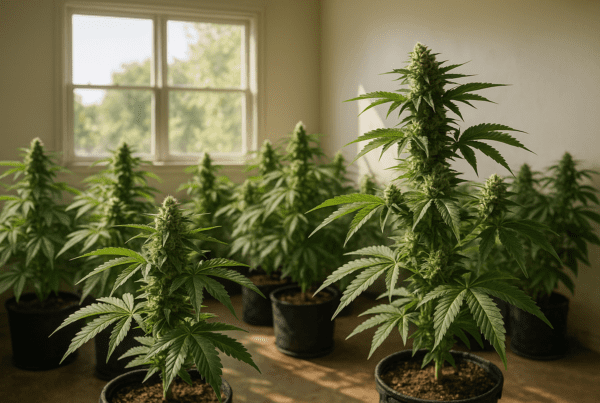

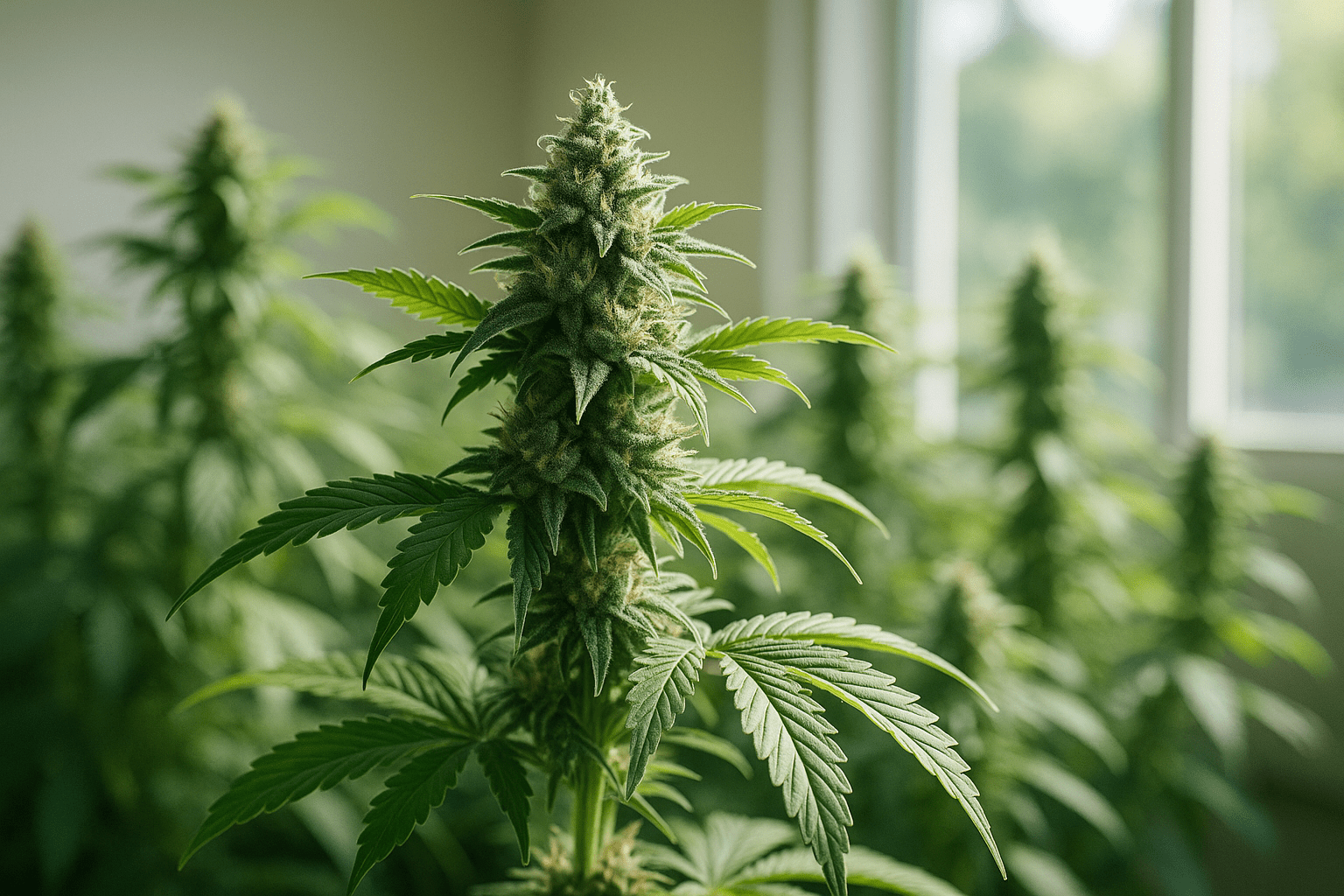
Among cannabis growers, the conversation about photoperiod has a long history with well-known benchmarks. Traditional photoperiod cultivation cycles settle into roughly 18 hours of light for vegging and 12 hours for flowering. Yet, many cultivators have been experimenting with extending the daily light exposure beyond those norms, whether in the vegetative phase or pushing subtle tweaks into early flowering. Their firsthand insights reveal more about how cannabis plants truly respond to longer days of light, peeling back layers of what theory alone suggests.
Stretch, stress, or steady growth?
One thing growers report consistently is an initial boost in stretch or vegetative growth when light extends past the typical 18-hour window. Instead of slowing, stems elongate with a burst of new nodes, but it is often less uniform than standard veg phases. Some describe the plants seeming slightly unsettled, almost like unfamiliar signals generate uneven cell division. Rather than the neat stack of leaves and internodes common to classic veg lighting, branching can become irregular or lopsided.
There is also talk of increased metabolic load. Cannabis under extended light sessions requires a balance in water and nutrient supply to keep pace with photosynthesis rates, or the plants show early signs of resource strain. Leaf edges may curl or show subtle chlorosis as growers try to dial in conditions. Those handling large operations note that light-sensitive parameters like temperature and humidity may need adjustment too, or stress symptoms accumulate even when all else seems right.
Flowering timelines and morphologies in flux
When it comes to flowering initiation, reports diverge depending on how long the light period extends and for how many days the pattern is maintained. Some cultivators find that pushing photoperiods past the classic 12-hour mark delays flower onset but does not prevent it altogether. The plant’s internal clock slowly adapts, and in some strains, this stretching of light timelines has led to a flowering phase stretched thin over a longer period.
Other more sensitive or photoperiodic strains stall noticeably when light extends beyond a critical point. They might hesitate at the cusp of switching from veg to bloom, holding onto leafy growth well past the usual window and increasing node count. This shift can alter bud formation, with flowers sometimes appearing less compact or more loosely spaced along stems. These outcomes suggest the photoreceptive proteins and hormonal pathways behind flowering are responsive not only to absolute hours of dark but also nuanced light patterns.
Unseen shifts beneath the surface
Beyond visible changes, a number of growers note something intangible yet real: a difference in plant vigor and aroma that seems to correlate with prolonged light exposure. Some say the terpene profile subtly shifts, though such claims come from sensory observation rather than lab tests. This may hint at complex metabolic rebalancing occurring under unusual light regimes.
Another dimension lies in the molecular responses at play. While many insights stem from scientific publications, cultivators’ anecdotal evidence tracks with findings about photoreceptor proteins like phytochromes and cryptochromes responding dynamically to light duration, intensity, and spectrum. These proteins influence gene expression connected to growth, flowering, and stress responses.
Adapting cultivation practices in response
For growers intrigued by extended photoperiods, practical tweaks follow naturally. Some recommend increasing ventilation to offset heat buildup under longer light runs, while others emphasize careful monitoring of water and nutrient delivery to prevent deficiencies or toxicity. The need to adjust temperature schedules also comes up, as plants may prefer slightly cooler nights when light periods expand.
Beyond technical adjustments, there is often a philosophical shift too. Many experienced cultivators caution against assuming longer light means better growth unconditionally. Instead, they advocate for observing each strain’s unique response, noting how photoperiod extensions can bring both opportunity and risk.
The fine balance between vegetative growth and flowering is the heart of controlling yield quality and timing. Extended light periods may open new doors but require attentive eyes and flexible management. It is not just about more energy pumped into photosynthesis; it is about how that energy is processed biologically and how the plant’s internal rhythms stay in sync.
Observing these patterns contributes to a more nuanced understanding of cannabis as a living system constantly adapting to environmental variables. For anyone growing cannabis, this is a reminder that the plant rarely follows rigid schedules. Instead, it asks for ongoing attention, open-mindedness, and respect for natural rhythms, even as cultivation technologies become ever more precise.
Those curious to explore extended photoperiods often find communities sharing results online, such as forums and grow journals where real-world experiences accumulate. Alongside traditional resources like university extension sites, industry reports, and research hubs, these firsthand observations provide valuable perspectives on what happens when cannabis plants face longer days.
For example, the Grow Weed Easy guide to photoperiod summarizes typical flowering triggers and the effects of altering light schedules. Additionally, research compiled by institutions such as Colorado State University highlights the influence of light cycles on phytochemical expression, supporting some claims growers make about changes in aroma or potency during extended light exposure periods (Purdue University report).
Such resources form a bridge between controlled scientific studies and the practical explorations of cultivators pushing boundaries in real spaces, whether indoors under LEDs or in controlled greenhouses.
Ultimately, ongoing communication between researchers and growers enriches collective knowledge about how cannabis plants perceive and respond to environmental signals. Extended photoperiods offer another window into this dialogue, inviting curiosity tempered by patience and care.
Sources and Helpful Links
- Grow Weed Easy photoperiod guide, a reliable grower-focused resource outlining light cycle basics for cannabis.
- Purdue University cannabis research summary, detailing scientific observations about photoperiod effects on cannabis physiology.
- Colorado State University extension on cannabis lighting, discussing the impact of different light cycles on plant growth and development.
- Leafly article on experiments with cannabis light cycles, capturing grower experiences and industry insights on varied photoperiods.