
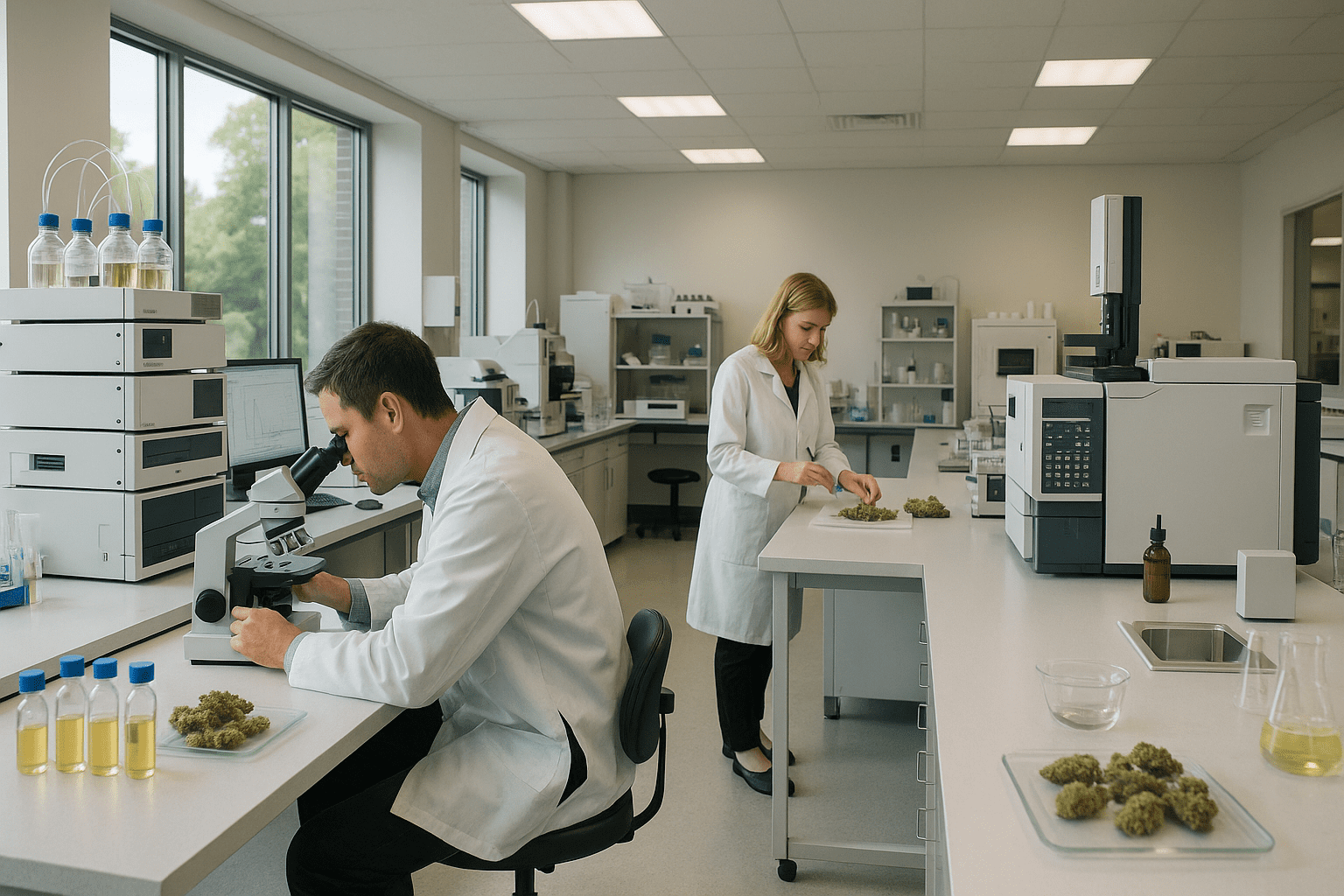
Within the shifting landscape of cannabis regulation and consumer expectations, independent laboratories have emerged as crucial players in shaping what quality really means. While growers and brands often focus on potency and the craft behind cultivation, independent testing introduces benchmarks based on firm data, giving shoppers and regulators transparent points of reference.
The transformation of cannabis quality through science
The story of cannabis quality once revolved largely around informal knowledge and consumer trust. Early buyers had little more than anecdotes and reputations to guide choices. As legal markets expanded, governments began requiring safety checks including chemical profiling and contaminant screening. But the role of labs evolved beyond mere compliance checks. Now, these labs serve as third-party fact-checkers whose evaluations impact how cannabis is understood from cultivation through consumption.
In markets marked by diverse genetics and growing methods, objective measures help ground cannabis in tangible quality indicators. There is a new accountability implicated whenever a test result contradicts a brand’s claims or when patterns emerge across batches. Cultivators and manufacturers keen to maintain credibility give weight to lab outcomes, recognizing how such data can be the difference between consumer confidence and skepticism.
Trust as a product feature shaped by testing
Transparency brought by independent labs does more than tick regulatory boxes. It communicates openly with consumers and distributors, reducing ambiguity about what is inside a package. Published lab results assure customers by confirming the potency of cannabinoids or the absence of microbial contaminants, making the product’s story less about marketing myths and more about scientific evidence.
That said, the pathway to clarity is not straightforward. Complex jargon and dense reports could alienate consumers rather than educate them. Labs that emphasize clear summaries and accessible explanations can transform test results from bureaucratic hurdles into trusted tools for product selection. In this way, testing creates a more informed dialogue between producers and the people who use their products.
The uneven terrain of testing standards
Among the challenges independent labs face is the lack of harmonization in testing protocols. Different states and countries apply varying criteria on which substances to test for and how to measure them. Even within a single market, labs might use different instruments or standards, leading to variations in results that frustrate direct comparison. This patchwork of standards muddies the effort to establish uniform quality expectations across the cannabis industry.
The rapid innovation in cannabis products also tests the adaptability of labs. Concentrates, edibles, topicals, and infused beverages introduce new chemical matrices requiring specialized testing. Labs must continuously refine or expand their methods to keep pace with these changes, balancing accuracy with feasibility under commercial pressures.
There is often a gap between what testing can reveal and what consumers want to know. For example, terpene profiles or minor cannabinoids may be less rigorously tested or inconsistently reported, even though these components influence user experience. Independent labs that invest in advanced techniques and clear communication help bridge those expectations, but it remains a developing area.
Setting the pace for industry improvement
Despite these difficulties, independent labs act as agents pushing cannabis culture forward. Their findings spotlight areas ripe for improvement, inspiring producers to optimize cultivation environments, harvest timing, or extraction processes. When lab benchmarks become the standard, growers often redesign practices to meet or exceed them, fueling a feedback loop of quality enhancement.
Policy makers also rely on extensive lab data to better understand the evolving market. This information can help regulators anticipate public health concerns or identify emerging product trends rather than responding only after problems arise. For consumers, access to third-party testing results empowers choice based on specific product traits, such as cannabinoid profiles or terpene content, deepening the sophistication of cannabis purchasing.
Beyond safety and potency, labs increasingly engage with analytics around pesticide residues, heavy metals, residual solvents, and microbial contaminants. These factors have gained prominence as safety remains a top priority for regulators and consumers alike. The data that labs provide can trigger recalls or reformulations, shaping product design and supply chain decisions.
The limits and legacy of laboratory testing
Even as labs deliver critical data, they do not capture every aspect of quality. Personal experience, aroma, and flavor remain subjective dimensions that science only partially explains. Nonetheless, labs provide the foundational assurances that protect health and certify product contents, supporting a richer, safer cannabis marketplace.
In addition to certification roles, independent labs educate the community by clarifying what different test results mean for cultivation decisions and anticipated effects. Their work shines light on how environmental factors or genetics influence potency and safety, enriching growers’ understanding and consumer awareness alike.
Looking ahead, the alliance between growers, testers, and regulators will shape cannabis quality beyond present accomplishments. This network ensures that measures of quality rest not on hype or uncertainty but grounded data and shared knowledge, laying groundwork for the future of cannabis as a credible, diverse market.
Cannabis industry stakeholders interested in the regulatory frameworks and testing efforts can find comprehensive resources via the National Conference of State Legislatures, which outlines state-specific cannabis policies and testing mandates. Likewise, The Cannabis Standards Association focuses on advancing uniform quality and testing standards, playing a vital role in pushing industry consistency forward.
Perspective from those closer to testing’s effects in the marketplace can be found in journalistic reporting like the Leafly article on independent cannabis testing, which captures how these labs influence consumer trust and industry innovation.
Sources and Helpful Links
- National Conference of State Legislatures, overview of cannabis laws including lab testing requirements
- The Cannabis Standards Association, a group working toward uniform quality standards for cannabis testing
- Leafly on independent cannabis testing, article exploring the impact of lab testing on the cannabis industry