

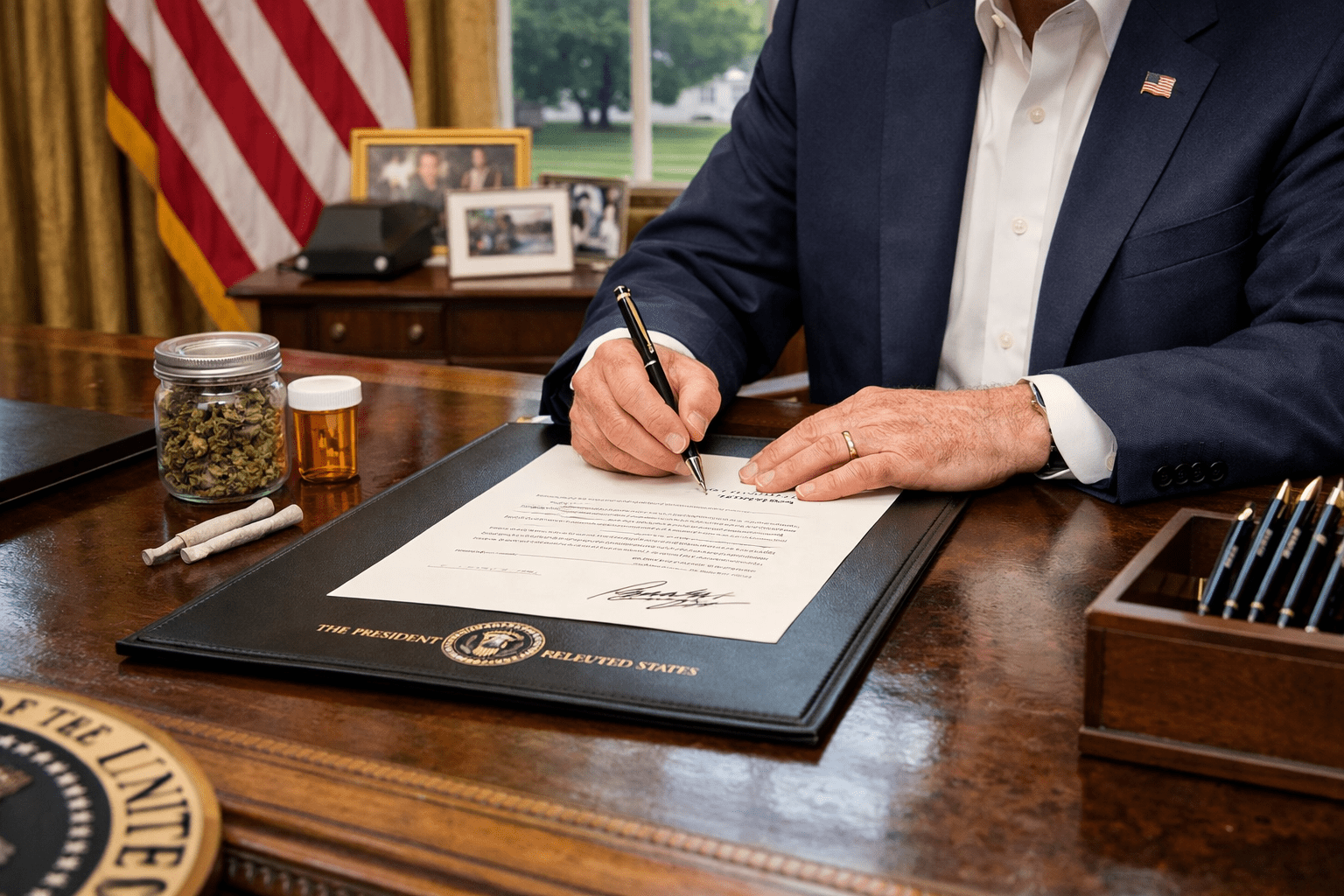
When President Trump signed an executive order related to marijuana declassification, it set off a cascade of questions and cautious optimism across multiple sectors. Legal observers and industry figures have since grappled with the practical ripple effects of this federal move, which while significant, leaves plenty of room for interpretation and further action.
Federal stance and evolving classifications carry unexpected weight
The federal government’s classification of marijuana as a Schedule I substance has long been a central hurdle in cannabis policy. The executive order signals a deliberate step toward altering this standing under the Controlled Substances Act, but it stops short of outright legalization or sweeping reform.
Instead, the order reflects a growing recognition of shifting public attitudes and state policies that have increasingly embraced medical and recreational marijuana use. The federal process of declassification opens a door, though it is narrow and lined with bureaucratic complexity. Such orders typically task agencies like the Drug Enforcement Administration and Department of Health and Human Services with re-examining the scientific basis for the drug’s status.
The impact of removing marijuana from Schedule I is significant even if gradual. Schedule I drugs are defined as having a high potential for abuse and no accepted medical use, so shifting marijuana out of that category could lessen federal restrictions on research, banking, and interstate commerce, provided Congress and other federal players follow all relevant procedures.
Legal and regulatory reverberations in state and federal systems
While states continue to chart their own marijuana laws with growing diversity, federal policy changes like this executive order complicate the landscape. States that have already embraced legalization or medical use may find federal interference less threatening, but those holding on to prohibitionist policies might respond differently.
One interesting tension lies in federal enforcement priorities. Even before this executive order, Justice Department memos fluctuated on how aggressively to pursue marijuana-related offenses, often influenced by administration priorities. This order might further influence law enforcement’s discretion, though it does not compel immediate changes.
There are also questions around banking and financial services. Cannabis businesses face well-documented challenges due to federal prohibitions, causing many to rely on cash. With a shift in classification, banks could feel less legal risk in serving cannabis clients, potentially easing those struggles. However, until Congress acts to explicitly reform financial regulations, obstacles remain.
Industry momentum meets federal pragmatism
The cannabis industry has been watching developments closely, wondering if the order signals a broader federal thaw. For many operators and investors, the idea of declassification hints at future opportunities: smoother interstate commerce, broader access to capital, and more robust scientific research.
Yet the slow pace and limited scope of the executive order underscore a careful federal approach. Without congressional action to rewrite laws or comprehensive regulatory frameworks, changes remain preliminary. Industry stakeholders appear aware that executive actions, while impactful, often face significant implementation gaps and legal challenges.
The orders also prompt significant medical research avenues. Historically, federal restrictions severely limited clinical studies on marijuana’s medical potential. By reclassifying the substance, agencies may facilitate expanded research initiatives, potentially resulting in better understanding of therapeutic uses and safety profiles.
Public perception and the political undercurrents
Public opinion plays an undeniable role in shaping marijuana policy. Over the last decade, a majority of Americans have expressed support for legalization in various polls. Executive orders like this one can be read as the federal government acknowledging this shift, aligning federal policy more closely with public sentiment.
Still, the political landscape remains fragmented. The executive order side-steps the polarizing debates in Congress, delivering a unilateral adjustment that may be easier to enact but lacks the permanence legislation would ensure. Lawmakers on both sides maintain divergent views, and future administrations could reverse or alter the trajectory without Congress enshrining changes into law.
Media and advocacy groups have reacted with a mixture of praise and caution. Some view it as an overdue correction to outdated classifications, while others warn against reading too much into a single executive order, advocating for sustained legislative and regulatory attention.
All of this unfolds as states continue experimenting with cannabis policy in real time, creating a patchwork regulatory environment that complicates national coherence but reflects diverse local values and priorities.
Substance abuse concerns and wider societal implications
Despite signs of liberalizing attitudes, there are ongoing concerns about the social impacts of cannabis use. Policymakers remain divided on the public health effects, especially within youth populations and impaired driving issues.
The executive order itself does not address these concerns directly but could eventually lead to more robust data collection and evidence-based policies as federal agencies gain greater leeway to conduct studies.
It also plays into the larger conversation around drug policy reform, criminal justice, and economic equity. Many advocates emphasize that changing classifications is a first step toward addressing inequities in marijuana-related arrests and convictions that disproportionately affect marginalized communities.
Ultimately, the executive order highlights how cannabis policy is as much about culture and values as it is about science and law. The complexity of balancing liberty, safety, medical need, and economic opportunity remains at the center of ongoing debates.
In sum, the executive order on marijuana declassification offers a nuanced shift within federal policy. It uncovers new possibilities while reminding stakeholders of the slow, intricate processes that govern drug law changes. The unfolding chapters will be shaped not just by policy but by persistent dialogues involving health experts, lawmakers, industry players, and everyday citizens.
For readers interested in following the evolving landscape of marijuana policy, staying connected to official DEA updates and carefully scrutinizing federal regulatory moves can provide valuable insight into how these federal-level decisions translate into real-world impact.
The story, it seems, is far from over.
Sources and Helpful Links
- Drug Enforcement Administration Controlled Substances Act – The legal framework for drug classification in the United States
- Healthline on Medical Marijuana and Executive Actions – Examination of recent executive orders affecting cannabis policy
- Congress.gov on the Marijuana Opportunity Reinvestment and Expungement Act – Legislative efforts related to cannabis reform
- National Institutes of Health Cannabis Research Overview – Summary of federal research on cannabis and health implications