
Cannabis cultivation in urban areas rarely looks like the sprawling farms or large industrial warehouses often highlighted in conversations about cannabis growing. Instead, city growers work within much smaller and more constrained areas, carving out spaces with creativity and an eye toward efficiency. The story of urban cultivation quietly unfolds as a study in adapting to compact environments while still aiming for quality and consistent results.
Rethinking Space With Vertical Layers and Hidden Corners
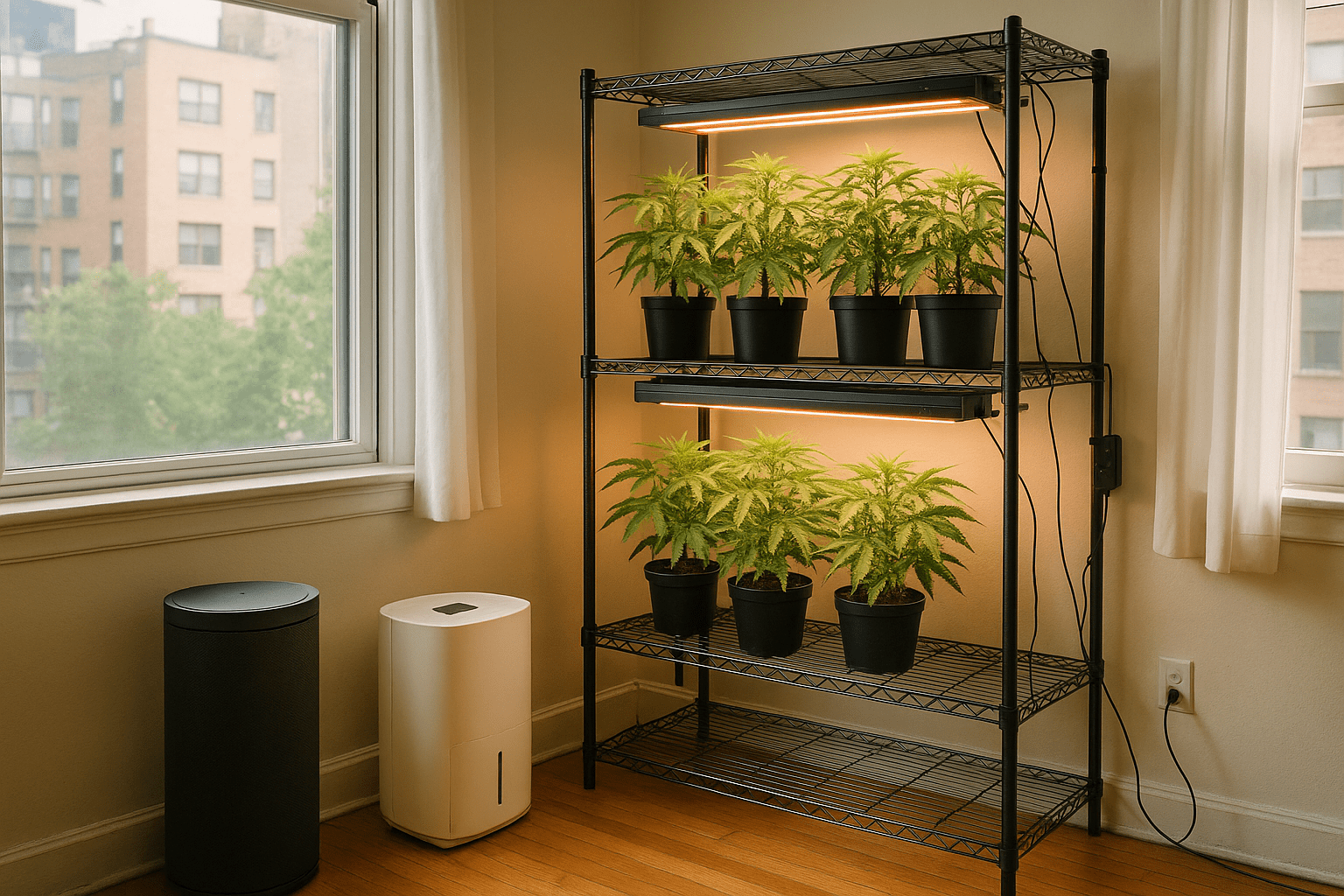
Limited square footage means that urban growers rarely have the luxury of setting up traditional wide grow rooms. Instead, they’ve turned to vertical space as a resource to be mined. From stacking shelving units outfitted with dedicated LED lighting to designing multi-tier hydroponic racks, the footprint of cultivation moves upward rather than outward. This three-dimensional approach lets cultivators host more plants within the same floor area, though at the cost of increased complexity in airflow management.
Spaces chosen for cultivation might be anything from closets to spare bathrooms or even custom-built cabinets. These niche spots often restrict air circulation and height, compelling growers to develop tailored ventilation setups. Combining carbon filters, inline fans, and sometimes mini air conditioners, growers juggle the challenge of heat and humidity control to avoid problems like mold outbreaks that can rapidly ruin small harvests.
This focus on verticality leads to careful consideration of plant arrangement, pruning techniques, and light placement. Since air tends to stratify with warm pockets near the top layers, ventilation fans must be positioned strategically for consistent airflow to all plants. In this way, urban growers master a nuanced dance of spatial and environmental control to keep plants thriving inside tight quarters.
Precision Lighting for Tight Quarters
Another major contributor to optimization is lighting technology. Growing cannabis in an apartment or small room comes with limits on electrical capacity and heat tolerance. LED lights, which have become the go-to for many city growers, stand out because they consume less energy and produce less heat compared with traditional high-intensity discharge lamps.
Many urban cultivators choose adjustable-spectrum LED panels allowing shifts from blue-heavy light for vegetative growth to red-rich light for flowering. This adaptability makes good use of power and fine-tunes growth stages. Smaller, modular lights targeting individual plants are also popular, allowing growers to control light intensity and coverage precisely without unnecessary energy waste.
These lighting strategies reflect a departure from the large overhead fixtures common in expansive grows. Instead, there is a deliberate effort to fit lights into the geometry of small spaces, sometimes integrating them alongside shelving or inside cabinets. The result is a lighting environment custom-crafted to make every watt count and every centimeter of canopy well illuminated.
Hydroponics Versus Soil in Urban Conditions
When it comes to the medium, urban growers split between hydroponics and soil, each bringing different trade-offs. Hydroponic methods like Deep Water Culture or ebb-and-flow trays are attractive for their compactness and often faster growth cycles. These systems can tuck neatly onto shelves or tables and reduce the bulk of potting soil that takes up space.
However, hydroponics demand close monitoring of nutrient levels and pH balance, which fluctuate with changing environmental conditions typical of city interiors. Urban growers who opt for these methods often adopt sensor-based monitoring and automated dosing to maintain stability.
On the other side, soil remains a reliable choice for many, particularly those new to growing or who prefer a less technical approach. Soil’s forgiving nature helps buffer some errors and environmental swings. It also allows growers to move and rearrange pots to catch natural or artificial light throughout the day. The trade-off might be somewhat slower plant growth and a larger spatial footprint, but many appreciate the simplicity and hands-on rhythm soil cultivation offers.
Living With the Grow in Shared Urban Spaces
Urban cannabis growing does not happen in isolation but often alongside roommates, neighbors, or landlords. This reality drives a need for stealth and harmony. Carbon filters and smell-proof containers have become indispensable to keep cultivation discreet. Fans and filtration units are chosen not just for efficiency but also for quiet operation to avoid drawing attention.
Recent technology trends have brought consumer-friendly environmental sensors and Wi-Fi connected monitors into the mix. Some growers use smartphone apps to check humidity, temperature, and light levels remotely, a convenience when plants occupy multi-use rooms or when time away from home is frequent.
Because urban cultivation usually involves smaller batches, growers tend to prioritize quick adaptability. Modular shelves, portable LED lights, and easily movable systems mean setups can be altered or dismantled with relative ease. This flexibility is crucial in markets where housing situations can change quickly or where legal constraints require discretion or quick compliance.
Community forums, social media groups, and online resource sites form an important part of knowledge-sharing in urban growing circles. Tips on optimizing limited spaces, troubleshooting equipment, and seasonal adjustments flow fast among enthusiasts. This shared learning speeds up problem solving and innovation in ways that support the latest trends in compact cannabis cultivation.
Overall, urban cannabis cultivation is defined by a clear sense of adaptation. Growers take what might seem like limitations and turn them into avenues for creative problem-solving. They blend technology, space management, and plant biology knowledge to sustain healthy growth within environments shaped by dense city living.
As these practices develop, they offer a different perspective on growing success – one that values mindfulness and detail-oriented care over sheer scale. The urban grower may never have a sprawling canopy but often achieves a deep connection with the plants cultivated in their modest surroundings.
For more insight into small-space cannabis growing, Leafly discusses practical ways to maximize tiny grow rooms, and the NCSU Cannabis Education Program shares research supporting urban cultivation strategies. These resources highlight a blend of science and experience underlining the evolving urban cannabis culture.
Though the constraints of city life may narrow the scale, they open opportunities for innovation, efficiency, and a kind of intimacy with the cultivation process that larger grows often lack.
Sources and Helpful Links
- Leafly for practical advice on maximizing small grow spaces
- NCSU Cannabis Education Program offers research-backed cultivation insights
- GrowWeedEasy shares detailed information suited for home and urban growers