
Indoor cannabis cultivation has long been a careful balancing act, where growers must control conditions to optimize plant health and yield. Among the many challenges, managing pests without harming the delicate environment remains a critical concern. Recent advances in environmental monitoring have begun to reshape pest management tactics, giving cultivators richer data and more nuanced control than ever before.
The evolving nature of pest threats indoors
Pests in indoor grows do not behave exactly like those in outdoor agriculture. The closed environments limit natural predators and often create microclimates where pests can thrive unnoticed. Spider mites, fungus gnats, and thrips have been persistent adversaries, exploiting subtle shifts in humidity, temperature, or light. Early detection in these settings has historically been difficult since symptoms often become visible only after infestations are well established.
Industrial and homegrow operators alike rely on integrated pest management (IPM) strategies that blend preventative measures, monitoring, and targeted interventions. However, without continuous observation, IPM can struggle to keep pace with the rapidly changing indoor environment and the pests’ life cycles.
New layers of data start to change the game
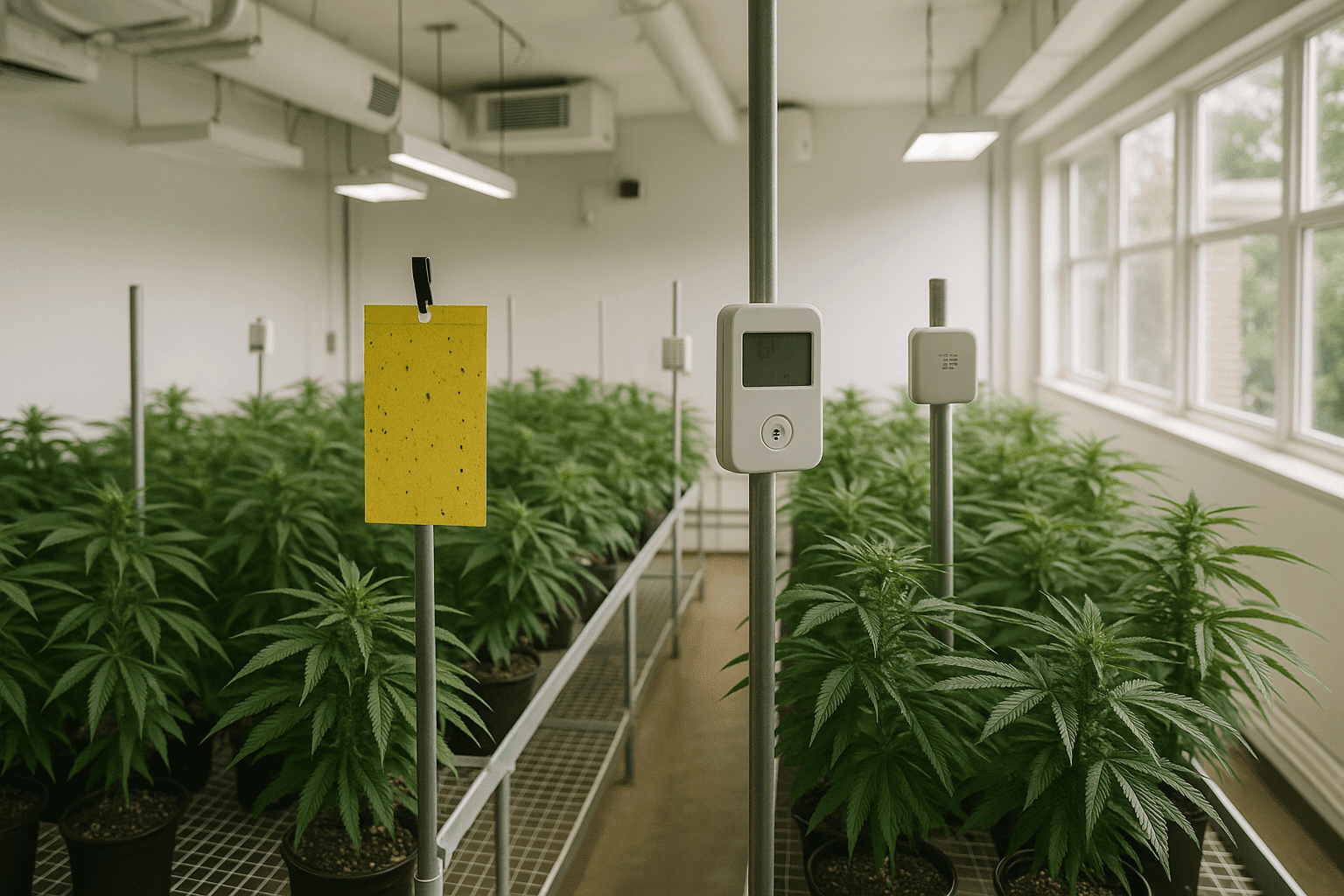
Environmental sensors embedded throughout grow rooms now offer detailed real-time streams of data including temperature, relative humidity, CO2 levels, light intensity, and even airflow patterns. These data points help anticipate conditions that could encourage pest outbreaks or fungal growth. They provide context, allowing cultivators to recognize when a sudden spike in humidity or a temperature rise may invite spider mites to multiply rapidly.
Some sophisticated systems integrate machine learning algorithms to analyze patterns and alert growers before visible signs appear. This shifts pest management from reactive to proactive, emphasizing prevention instead of just treatment. Sensors combined with visual technologies like high-resolution cameras and automated leaf scans can identify early abnormalities at the plant level. These insights help growers intervene faster with less disruptive approaches.
Beyond detection: Dynamic environmental adjustments
Improvements in monitoring are increasingly tied to automated environmental controls. Climate control systems can now adjust airflow, temperature, or humidity based on pest risk assessments delivered by sensors. For example, lowering humidity on a subtle early warning can inhibit mold spores or pest egg hatching, reducing the need for chemical treatments.
This kind of dynamic feedback loop between sensors and environmental controls is still developing, but it reveals the potential for smarter indoor ecosystems. Growers who leverage these tools witness a reduction in pesticide use, more consistent crop quality, and often lower operational costs because problems are nipped in the bud instead of escalating.
Challenges and realities in adoption
Despite the promise, not every indoor grow operation can or will tap into the newest technology quickly. The financial investment in sensors and controls, combined with the learning curve to interpret data correctly, can be barriers, especially for smaller cultivators. In addition, sensors and data analytics tools sometimes generate overwhelming amounts of information that require careful filtering to avoid ‘analysis paralysis.’
Pest organisms themselves can develop resistance or find refuge in areas beyond sensor reach, so environmental monitoring should be seen as a valuable component of an integrated approach rather than a standalone solution. Trusted inspection practices and biological controls remain necessary to complement data-driven tactics.
Looking ahead: A more nuanced pest management culture
The traction gained by environmental monitoring systems reflects a broader shift in indoor cannabis growing towards precision agriculture principles. The increasing availability of relatively affordable technology and cloud-based analytics services means that even smaller-scale growers can benefit from data insights without massive infrastructure investments.
As growers become more familiar with interpreting environmental data and integrating that knowledge into their pest management decisions, a deeper understanding of pest ecology inside indoor environments is emerging. This knowledge tends to favor holistic methods that reduce chemical inputs and promote sustainability. While no system guarantees a pest-free crop, these advances are shaping a future where management adapts fluidly to changing conditions, rather than reacting after damage occurs.
For growers paying close attention, environmental monitoring is not just about sensors and software. It extends into noticing the subtle interactions in the grow room-the smell of dampness, shifts in leaf texture, or quiet changes in temperature that signal upcoming trouble. Technology enhances this sensory awareness rather than replacing it.
In this evolving landscape, pest management in indoor cannabis cultivation moves closer to an integrated, real-time science where every data point feeds into more effective and sustainable growing practices.
For further reading on integrated pest management principles and monitoring technology in cannabis cultivation, the UC Integrated Pest Management Program provides a thorough overview tailored to California growers. The Grower Intel platform illustrates how data-driven tools are being applied in commercial settings. To understand the latest advances in sensor technology and climate automation, Cannabis Business Times offers detailed reports and case studies. For a wider perspective on integrated pest management effectiveness, the US Environmental Protection Agency’s IPM principles page remains a foundational resource.
Understanding and deploying environmental monitoring tools carefully entails some trial and error and ongoing learning, but it also opens new pathways for healthier plants and cleaner, less chemical-dependent cultivation environments.
Sources and Helpful Links
- UC Integrated Pest Management Program – Comprehensive guidance on pest management strategies suitable for cannabis cultivation and California agriculture
- Grower Intel – A platform focused on data tools for environmental and pest monitoring in commercial cannabis grows
- Cannabis Business Times – Insights on the use of environmental sensors and automation in greenhouse and indoor cannabis cultivation
- US EPA IPM Principles – Foundational information on integrated pest management from a regulatory viewpoint