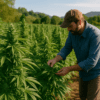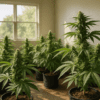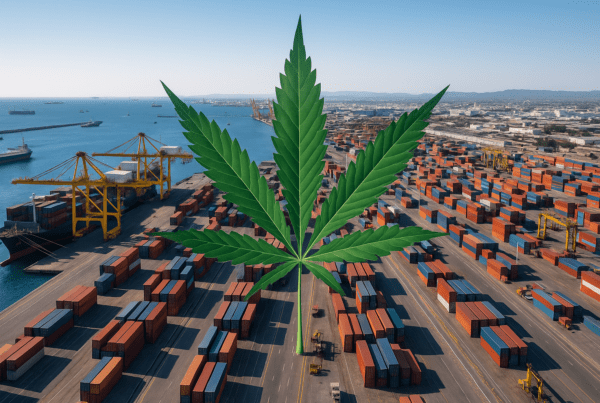

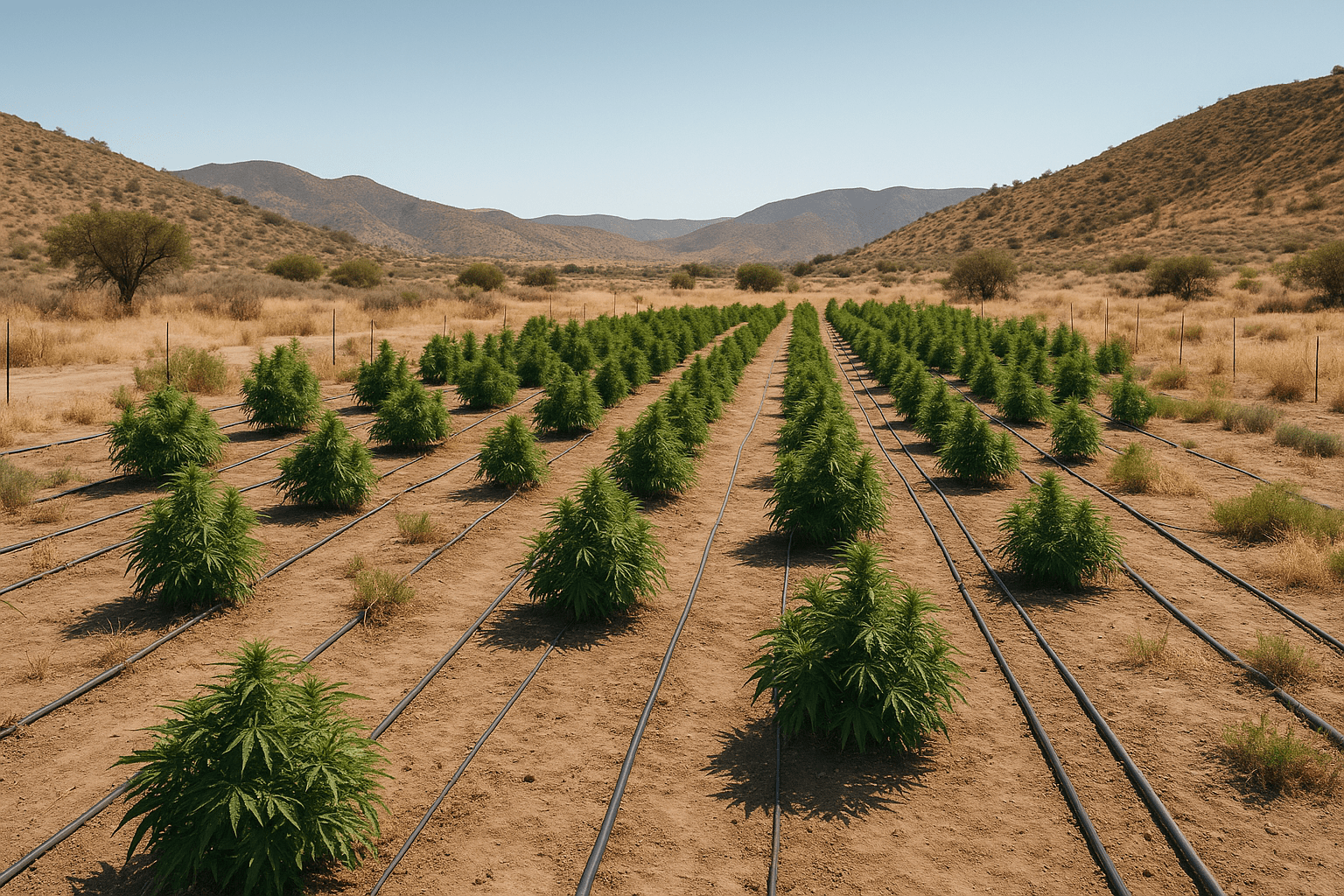
In parts of the United States where the dry climate presses hard against water supplies, cannabis growers find themselves confronting a tension that is far from theoretical. Semi-arid regions, with their characteristic lack of consistent rainfall and increasing drought frequency, create a demanding environment for cultivating a crop that, like many others, depends heavily on steady water access. The reality of water scarcity is reshaping how farmers approach cannabis cultivation, as they adapt to more constrained resources, shifting regulations, and evolving environmental pressures.
When Water Becomes a Precious Commodity
The semi-arid zones across states like California, Nevada, and parts of the Southwest bring a complex set of challenges to cannabis growing. Water scarcity is not new to these areas, but the rise in large-scale cannabis farming has intensified the competition for this vital resource. Crop irrigation, which historically draws from aquifers, rivers, and reservoirs, now faces stricter restrictions as climate patterns shift and demand across agricultural and municipal uses swells.
Water scarcity adds layers of uncertainty for growers who once relied on more consistent water access. For some, shortages mean cutting back on planted acreage or rethinking strain selections to favor plants that can tolerate drier conditions. Others are turning to technologies that promise greater efficiency, but these options often require capital investment that not every grower can afford. The broader issue spills into natural ecosystems as well, as cannabis farms compete with native vegetation and wildlife for dwindling water.
Adaptation Through Practices and Technology
From drip irrigation systems that deliver water directly to roots, thereby reducing waste, to scheduling watering times to avoid peak evaporation periods, growers are experimenting with ways to stretch every drop. Some embrace soil amendments that increase moisture retention, while others focus on crop management techniques that reduce overall water needs across the growing cycle.
Still, these adaptations unfold within a patchwork of regional water policies that can either enable innovation or complicate operations. For instance, in California, where many cannabis farms operate, regional water boards have implemented guidelines that regulate water withdrawals and even mandated certain reductions in usage during drought periods. These regulatory measures force farmers to rethink not just how they use water but how they plan their entire operation around anticipated water availability.
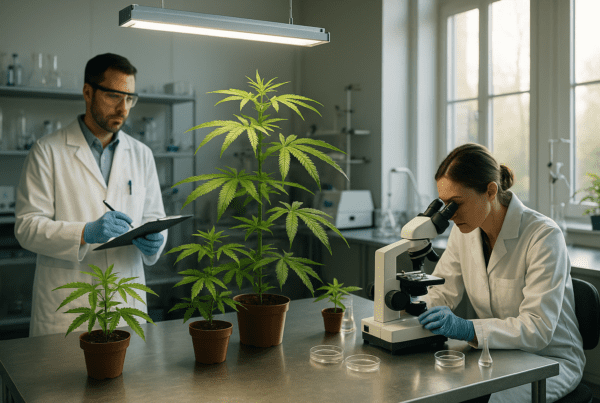
Cannabis cultivators are also observing shifts in plant response under water stress. Some phenotypes perform better with less water, suggesting that genetic selection could become a significant factor in future resilience. Growers tracking these variations report that some strains exhibit more efficient water use without a drastic drop in yield or cannabinoid content. This kind of on-the-ground observation offers practical insights that complement laboratory research focused on drought tolerance and water-use efficiency within cannabis genetics.
Broader Environmental and Social Dynamics
Water scarcity in semi-arid regions is more than a cultivation challenge, it is a window into the larger dynamics of resource allocation, environmental stewardship, and community relations. Cannabis farming, often framed through debates over legalization and regulation, intersects with these concerns in tangible ways. Local residents and environmental groups sometimes voice apprehensions about water diversion from streams and aquifers that support wildlife habitats or local agriculture.
Additionally, the cost of securing reliable water sources can drive disparities within the cultivation community. Larger or more financially equipped operations may access pumps, storage, and infrastructure that smaller farms cannot. This variation influences not only market competition but also who can persist in farming when water becomes scarcer.
Conversations within cannabis cultivation circles reflect a growing awareness of the ecological footprint associated with water use. This awareness is prompting collaborations aimed at promoting sustainable water practices. Some industry advocates and researchers encourage transparency around water sourcing and stress the importance of integrating cannabis production into broader regional water management strategies.
Looking Beyond the Cultivation Season
Cannabis farming is uniquely sensitive to water availability across its life cycle, from propagation to flowering. When water becomes scarce, the entire timeline adjusts, sometimes increasing the risk of stress-related issues such as reduced flower density or diminished terpene profiles, which consumers often prize. As growers become more attuned to these risks, they navigate a delicate balancing act.
The implications ripple outward, influencing the broader market and consumer expectations. A tighter water supply can affect crop consistency, pricing, and even the geographic distribution of production zones. Some regions may see a gradual shift away from outdoor cultivation toward controlled environments where water recycling and precise irrigation can be better managed.
Ultimately, water scarcity reveals the interdependence between natural cycles and agricultural practices. Cannabis farming in semi-arid regions is a microcosm of larger environmental and economic transformations underway. The adjustments made now will likely serve as a template for how this dynamic sector evolves in a climate-conscious future.
Observing these changes as they unfold offers a distinct perspective on the resilience and innovation within cannabis cultivation. Growers, regulators, and communities continue to explore what it means to steward water responsibly while meeting the demands of a growing industry and an uncertain climate context.
For more detailed insights on water use in cannabis farming and regional policies, sources such as the California State Water Resources Control Board and the Washington State University Cannabis Water Guide provide thorough resources. Industry-wide discussions around sustainability also appear in publications like Leafly’s coverage on cannabis water usage.
Meanwhile, scientific studies continue to explore drought tolerance traits within cannabis genetics at institutions such as University of Nevada’s cannabis research program, contributing valuable knowledge to help growers adapt effectively.
These layers of knowledge and experience underscore how water scarcity’s impact is felt across the ecological, regulatory, and cultural landscape of cannabis farming in semi-arid regions.
Sources and Helpful Links
- California State Water Resources Control Board – Guidelines and regulations for cannabis water use in California
- Washington State University Cannabis Water Guide – Educational resources on water impacts in cannabis cultivation
- Leafly’s coverage on cannabis water usage – Industry insights on water challenges in cannabis farming
- University of Nevada’s cannabis research program – Scientific studies on cannabis drought tolerance and water-use efficiency