
The world of cannabis cultivation moves like a constant experiment, where crossing strains isn’t just mixing names but weaving together complex stories inside the plant. Hybrid strains increasingly change the narrative about cannabinoids, offering effects and chemical profiles that don’t always follow the rules we imagine from parent plants. This evolving chemistry invites a look deeper into how breeders’ intentions meet the unpredictable realities of plant biology.
The Way Genetics Unfold Beyond Expectations
Cannabis plants express cannabinoids through genetics, a process tied to the DNA inherited from their ancestors. Early growers could often predict if a plant would lean toward high THC or CBD based on its lineage, giving rise to familiar ideas like indica or sativa dominance. But as hybrids blend these lines, the expected cannabinoid outcomes become less certain.
Take, for instance, the curious case of THCV, a cannabinoid that appears sporadically in certain hybrids but rarely in parent strains commonly grown. Some crosses bring out CBG or CBC more strongly, not because these cannabinoids were dominant in either parent but perhaps because of genetic recombination unlocking biochemical pathways previously silent or subdued.
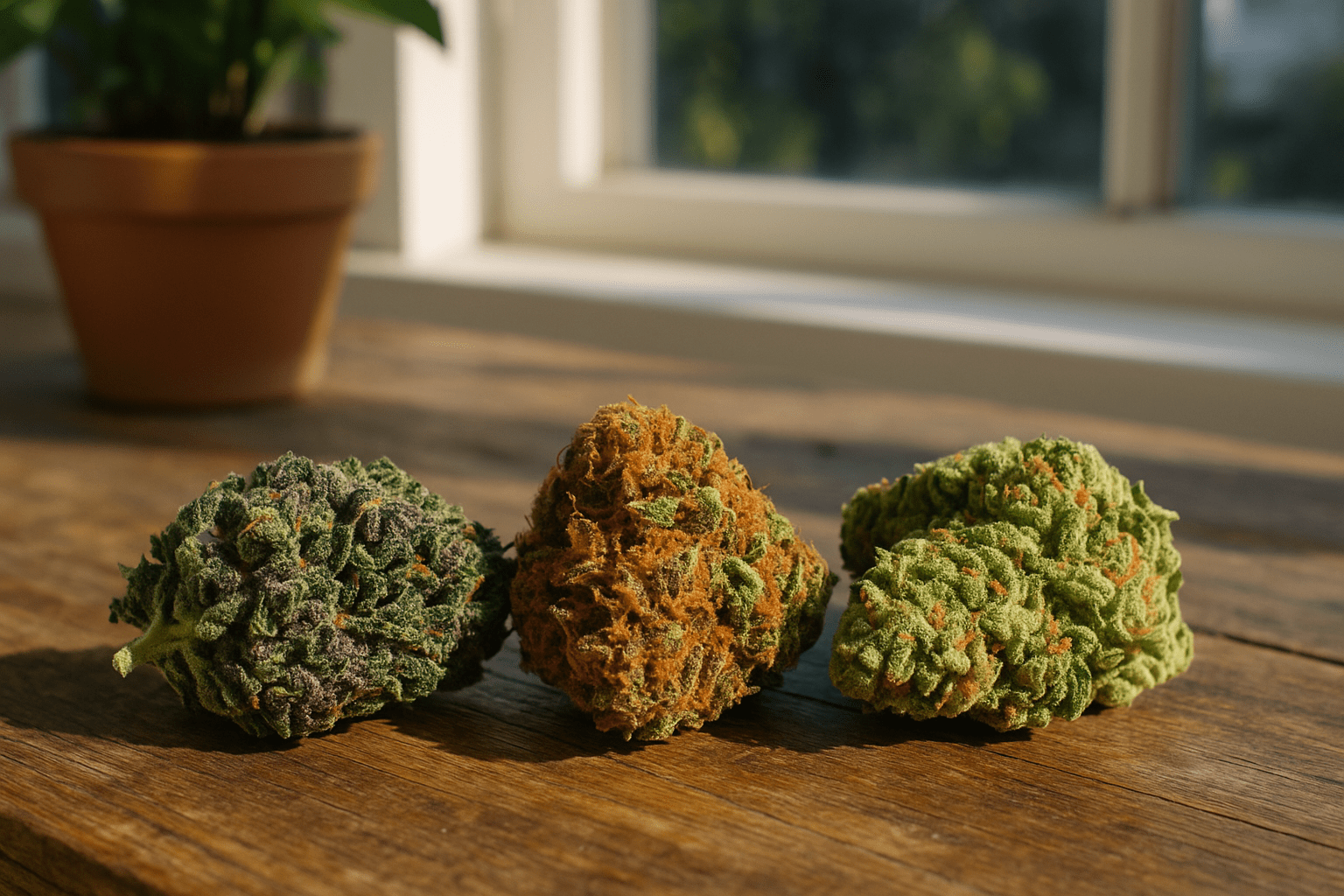
It’s a bit like mixing two colors that somehow reveal a shade neither original paint had. Growers have noted how some hybrid plants defy the straightforward story of simply splitting the difference. Instead, they create new blends that can show mid-level THC with an unexpected boost of minor cannabinoids, enriching the overall effect profile in ways that matter both for users and growers seeking distinctive crops.
Environment’s Role as a Chemical Influencer
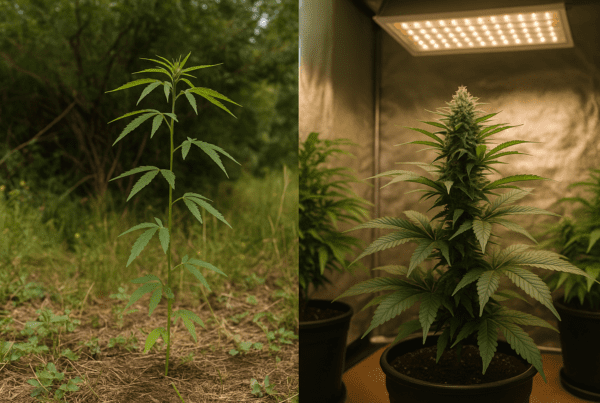
Even though genetics set a baseline, the surroundings where the plant grows influence which cannabinoids it decides to make and in what amounts. This is why two plants sharing the same genetic makeup can produce chemically different flowers if grown under different conditions.
Light cycles and intensity shape cannabinoid biosynthesis, with some hybrids reacting sensitively to subtle shifts in day length or brightness. Temperature and humidity are equally important, affecting how the plant metabolizes nutrients and ultimately synthesizes cannabinoids. Soil quality and feeding regimens introduce another layer, supporting or limiting the plant’s ability to produce complex compounds.
Hybrid strains, in particular, might respond unpredictably compared to their parents. For example, a plant with genetics from a cooler climate cultivar may lower THC production when grown in hotter settings, while one from a warm origin might struggle to express certain cannabinoids if cultivated in colder environments. Such observations highlight the interaction of genetics and environment as an ongoing conversation rather than a fixed script.
Tuning Into Potency and Aromatics
One emerging aspect growers notice is that cannabinoid potency doesn’t always behave in a linear or additive way in hybrids. Instead of simply averaging the THC levels of parent plants, hybrid chemistry often presents a more complex mixture. Some hybrids show a dilution effect in THC but compensate with an increase in other cannabinoids or aromatic terpenes, which can influence perceived potency or user experience.
Terpenes add another dimension by modifying how cannabinoids affect a consumer. The blending of floral, citrus, and earthy notes in hybrids can shift the mood and sensation associated with a strain. For example, limonene-rich citrus terpenes might complement a moderate-THC hybrid to create an uplifting effect, while pinene adds a crispness that changes the flavor landscape entirely.
These nuances point to a growing awareness in the cannabis community that “strength” is not just about the THC number but a gestalt of chemical interaction. Hybrids exemplify this because their multidimensional profiles provide opportunities for subtle and complex experiences that are hard to capture by a single metric.
Why Predicting Outcomes Remains Difficult
Breeders aim for certain cannabinoid targets when crossing strains, but genetics does not always cooperate in neat ways. Phenotypic variation—the observable traits shown by plants—can differ dramatically even within a single batch of seeds, making it likely that siblings vary in cannabinoid expression.
Researchers are now turning to genetic sequencing and chemotype mapping to identify markers connected with cannabinoid synthesis. This might help reduce unpredictability in future breeding efforts. However, cannabis genetics involve multiple interacting genes and external factors, so these early attempts remain limited.
Adding further complexity is that some parental strains themselves are genetically unstable or have unknown hybrid backgrounds, making it harder to pinpoint how traits will pass on. This is why reliable lab testing and sample analysis remain essential for growers and breeders to track what’s really happening chemically on the ground.
Real-World Reflections for Growers and Consumers
For people cultivating cannabis at home or on a larger scale, watching hybrid cannabinoid profiles change means embracing an attitude of curiosity and experimentation. Incremental adjustments in light, nutrients, or harvest timing can tilt cannabinoid balances, sometimes producing surprisingly different chemistry from one run to the next.
Consumers benefit from this dynamic just as much as growers. Hybrid strains bring diversity into the market, but that means effects can be more varied even when purchase labels seem consistent. That unpredictability challenges anyone trying to find a specific experience through hybrid flowers alone.
Lab testing provides some clarity in this flux. Websites like Leafly’s cannabinoid glossary help decode what different compounds mean for effects, while data from testing labs give more precise readings of cannabinoid and terpene content. For those tracking the evolution of cannabis chemistry, these tools are a necessary companion to observation.
The bigger picture shows that rather than a setback, the chemical variability of hybrids is a reflection of cannabis as a living, growing organism responding to its genetics and life conditions. Approaching cultivation and consumption with attention to this richness opens space for deeper understanding and appreciation of what hybrids can offer.
Exploring cannabinoid variation in hybrid strains connects to a broader conversation about plant science, consumer experience, and the evolving cannabis marketplace. These intersections reveal how the complex interplay of genes and environment shapes every harvest, inviting growers and users into a process that keeps unfolding with each new cross.
For more on how cannabinoids interact with cultivation practices, resources like Project CBD’s cannabinoid science and Marijuana Business Daily’s industry updates provide reliable information blending scientific insights and market perspectives.
Tracking cannabinoid profiles in hybrids remains a lively field where both tradition and innovation meet in plant chemistry’s ongoing story. Watching these changes unfold can deepen how growers and consumers alike understand cannabis’s many possibilities.
Sources and Helpful Links
- Leafly’s Cannabinoid Glossary provides definitions and context for common cannabinoids and their effects.
- Project CBD on Cannabinoids offers scientific insights into cannabinoids and how they work in the body.
- Marijuana Business Daily shares industry news and trends related to cannabis cultivation and processing.