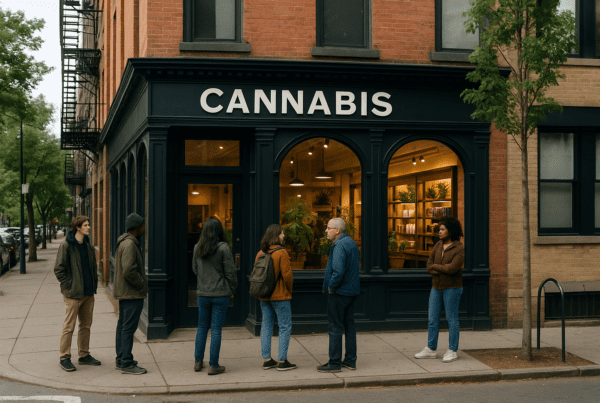


The landscape of cannabis regulations varies widely across cities and states, and a particularly complex area lies in how communities handle social consumption. Unlike personal use or cultivation rules, social consumption policies involve where and how people can consume cannabis in public or shared spaces. Local voices have become central to shaping these policies as communities wrestle with concerns around safety, equity, nuisance, and cultural acceptance.
When Policy Meets the Neighborhood
Often, cannabis legalization proceeds at a state level with broad frameworks, but the real work of defining social consumption permission happens closer to the ground. Cities and counties hold public meetings, hearings, and consultations in which residents express their views, hopes, and worries. These forums serve as an unusual intersection, where the abstract ideas of civil rights and public welfare come face to face with the everyday realities of neighborhood streets, local businesses, and community traditions.
For example, some residents emphasize potential negative effects such as increased traffic, noise, or exposure for minors, while others frame social consumption as a path toward normalizing cannabis and supporting local economies. These tensions reflect broader patterns about who gets to shape public space and how communities come to terms with changing cultural norms. The result can be patchwork rules that differ sharply even between neighbouring jurisdictions.
The Weight of Community Meetings and Surveys
Community input usually manifests in a mix of public hearings, written comments, surveys, and stakeholder focus groups. Many cities design engagement efforts to capture a wide swath of perspectives, although critics sometimes argue that these processes still privilege more vocal or organized interests. Even so, hearing directly from local residents provides officials with insights that might otherwise go unnoticed in state-level policymaking.
In places like Denver and San Francisco, public forums have become a critical space for airing concerns about where social consumption lounges should be located or how operations should be regulated to prevent nuisances. These discussions often help calibrate rules around hours of operation, security measures, and ventilation requirements.
This iterative approach can slow implementation but also creates policies rooted in local experience rather than top-down mandates. It shows how cannabis social consumption policy functions as a negotiation between community values, public health considerations, and economic interests.
When Equity and Inclusion Enter the Conversation
A growing focus in community input forums relates to equity, particularly around ensuring that social consumption opportunities do not exclude marginalized groups or deepen existing disparities. Local input has brought attention to the ways some neighborhoods are more likely to host cannabis venues while others remain underserved or experience over-policing.
Community groups frequently call for policies that support minority-owned businesses in the cannabis sector, provide safe social spaces for consumers who cannot use cannabis at home, and resist the stigmatization of certain populations. These conversations challenge policymakers to move beyond cookie-cutter regulations and consider the social and historical context of cannabis prohibition and enforcement.
When local organizers mobilize, their voices can shift policy toward inclusion. For instance, some cities now require that a portion of social consumption licenses go to businesses owned by people disproportionately affected by cannabis prohibition. Community input has also influenced educational outreach to mitigate secondhand exposure concerns in vulnerable neighborhoods.
Challenges and Uneven Outcomes Across Regions
Despite its significance, the role of community input is far from straightforward or uniform. Some jurisdictions receive limited feedback due to public apathy, lack of awareness, or mistrust of government processes. At times, louder voices drown out marginalized ones, leading to regulations that reflect the priorities of business interests or more affluent areas.
The complexity increases when communities face conflicting perspectives internally, for example between younger adults who favor expansive social use options and older residents worried about changing neighborhood character. This has made some local governments reluctant to enact social consumption rules, resulting in a regulatory gray area that frustrates consumers and businesses alike.
There are also cases where tight restrictions on public consumption push cannabis use back into private, unregulated settings, raising questions about whether local input ultimately supports harm reduction or deeper prohibition patterns. The balance between respecting residential concerns and recognizing consumer freedoms remains delicate.
Looking Ahead and Beyond Regulations
What seems clear is that community involvement will continue to influence how social consumption evolves. Early experiments in cities from Los Angeles to Portland to Toronto demonstrate that policy-making is often a push and pull, refining rules based on lived experiences and shifting attitudes.
As more places adopt social consumption policies, it will be important to watch how communities shape access, safety, and inclusivity in practice. The local feedback loop also offers an opportunity to test new models of public space management that consider cannabis alongside alcohol and other social activities.
Ultimately, the story of cannabis social consumption policies is as much about community voices and place as it is about the substance itself. These policy debates provide a lens into how society negotiates public use, privacy, and social norms in an era when cannabis is coming out from the shadows but still navigating complex terrain.
For those interested in more about how local voices impact cannabis regulations and social consumption, resources like the Cannabis Law Report and National Conference of State Legislatures track evolving policy landscapes. State and municipal websites often publish meeting notes and public comment archives revealing how community feedback shapes decision making in real time.
Observing these processes helps to understand cannabis policy as a living dialogue, not a static set of rules handed down from on high.
Sources and Helpful Links
- Cannabis Law Report – A news and analysis platform covering cannabis law and local policy developments worldwide
- National Conference of State Legislatures – Detailed summaries and resources on state cannabis legislation and regulations
- Denver Office of Cannabis Policy – City government hub providing information on cannabis regulations and public engagement in Denver
- San Francisco Department of Public Health – Information on cannabis policies and community input processes in San Francisco