
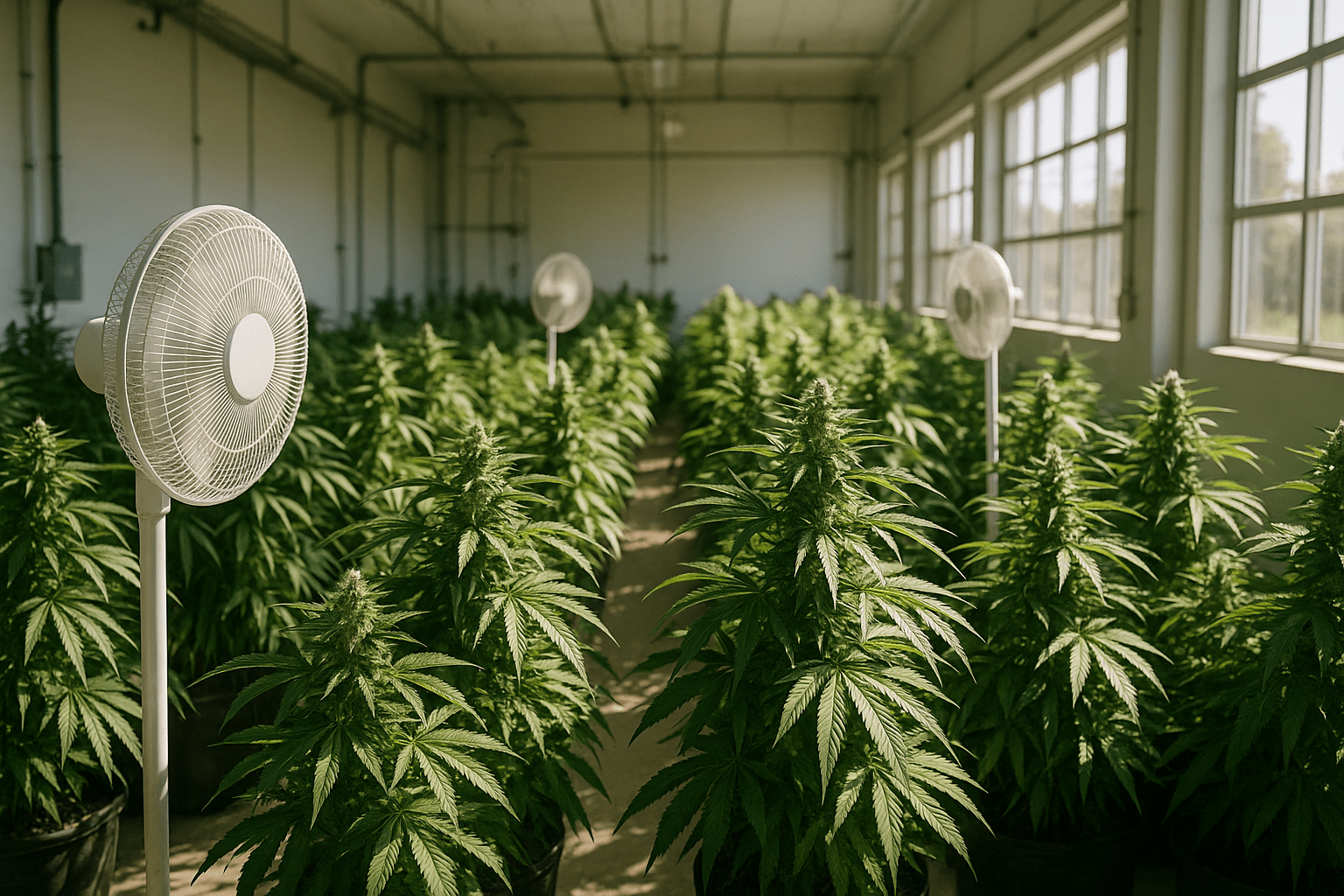
Inside an indoor cannabis grow room, air currents rarely get more thought than checking a fan or adjusting humidity. Still, these unseen movements quietly play a major role in the health and character of the plants. What might seem like a simple breeze acts as both a physical stimulus and an environmental regulator, subtly shaping how cannabis grows and copes with the indoor climate.
The Unseen Strength from Quiet Winds
Many growers associate healthy plants with a good, strong airflow aimed directly at stems and leaves. But the truth is more nuanced. Gentle and consistent airflow encourages cannabis plants to develop sturdier stems through a process called mechanical conditioning. When stems experience a mild and steady flexing, they respond by thickening, much like how muscles grow stronger through regular use. This natural response helps prevent branches from snapping under the weight of dense buds as harvest approaches.
In contrast, an absence of movement leaves stems thinner and less able to bear heavy flower clusters. At the same time, pockets of still air can trap moisture, creating microclimates that favor mold and mildew, especially in dense foliage lower down. On the flip side, overly harsh or uneven drafts dry out leaf margins and slow photosynthesis by pulling water from leaves too quickly. This delicate balance takes more than flipping a switch; it demands attentiveness to how airflow actually interacts with plants over time.
Humidity and the Quiet Lift of Circulating Air
Airflow joins with humidity as partners controlling the internal environment of indoor grows in subtle but crucial ways. While many think about humidity as a separate factor, airflow helps distribute moisture evenly, preventing trapped wet spots where pathogens thrive. This is most evident in thick canopies, where shaded leaves near the base can stay damp without enough air movement.
Strategies like oscillating fans and carefully planned intake and exhaust vents aim to move air gently, breaking up moisture buildup without stripping plants of their own hydration. Indoors, this challenge feels especially pressing, since natural outdoor breezes are absent. Instead, plants rely fully on artificial circulation to maintain a livable atmosphere. Maintaining this balance becomes a quiet dance involving growers, equipment, and the plants themselves, turning a simple room into a lively micro-ecosystem.
Whispers of Air Interrupting Pest Havens
The flow of air also plays a role in how pests behave within a cannabis garden. Insects like spider mites and whiteflies prefer calm environments to reproduce and feed. Continuous air currents make it harder for these tiny invaders to settle and multiply. While air movement alone will not solve pest problems, it forms an important part of integrated pest management by reducing favorable habitat.
Some cultivators have noted that changing airflow patterns, mixing steady currents with slightly varying directions, may confuse pests even more. This idea invites viewing the grow space more like a living ecosystem than an inert production zone, where air itself influences even the smallest inhabitants.
Temperature Layers Invisibly Shifted by Air Currents
Temperature in indoor grows rarely stays uniform all the way from floor to ceiling. Warm air naturally rises, leaving cooler pockets near the ground and creating microclimates that can either stress plants or slow their metabolism if left unaddressed. Proper airflow helps mix these layers, preventing temperature extremes that might stunt growth or cause uneven development.
Fans placed near lights combined with well-planned venting can encourage warm air to blend with cooler areas. This reduces hotspots and cold pockets, guarding delicate plant tissues against fluctuating conditions. Unlike fixed protocols, many growers develop a nuanced feeling for these temperature rhythms over repeated cycles and observation, tuning their airflow setups intuitively to maintain comfort for their plants.
Reading the Plant Responses to Airflow
The best feedback on airflow quality comes directly from watching plants themselves. Instead of relying solely on gauges or standard ventilation checklists, some growers look closely at leaf positions, stem firmness, and even resin development as signs of how airflow affects their crops. For example, leaves that never flutter might signal still air inviting mildew, while excessively moving leaves might indicate stress or wasted energy.
Developing this kind of plant literacy lets growers refine their ventilation to maintain enough movement to strengthen and protect plants without causing stress. This approach shifts environmental control from rigid standards to a responsive, dynamic craft informed by a deep connection to a specific grow room and strain.
Ultimately, airflow management in cannabis cultivation stands at the intersection of science and hands-on experience. It quietly supports plant health by balancing moisture, triggering mechanical growth signals, and disrupting pests. Understanding these subtle influences adds another layer of nuance to how growers create what often feels more like a living ecosystem than just a farm.
For those interested in expanding their knowledge, university extension programs and well-established growing communities provide a wealth of practical insights and research findings. The best setups emerge through trial, observation, and adaptation rather than rigid adherence to generic advice.
Welcoming airflow as a vital and active part of the grow space encourages a patient, observant mindset. It invites growers to think beyond simple ventilation and embrace a fuller picture of how air shapes the life and success of their cannabis crop.
Sources and Helpful Links
- Michigan State University Extension details how airflow supports healthy indoor cannabis plants
- Grow Weed Easy explains various types of airflow for cannabis and their effects on plant growth and health
- CDC Mold and Dampness Facts outlines how moisture control can prevent mold, a common risk in poorly ventilated grows
- Frontiers in Plant Science explores mechanical stimulation effects on plants with observations relevant to indoor cultivation