
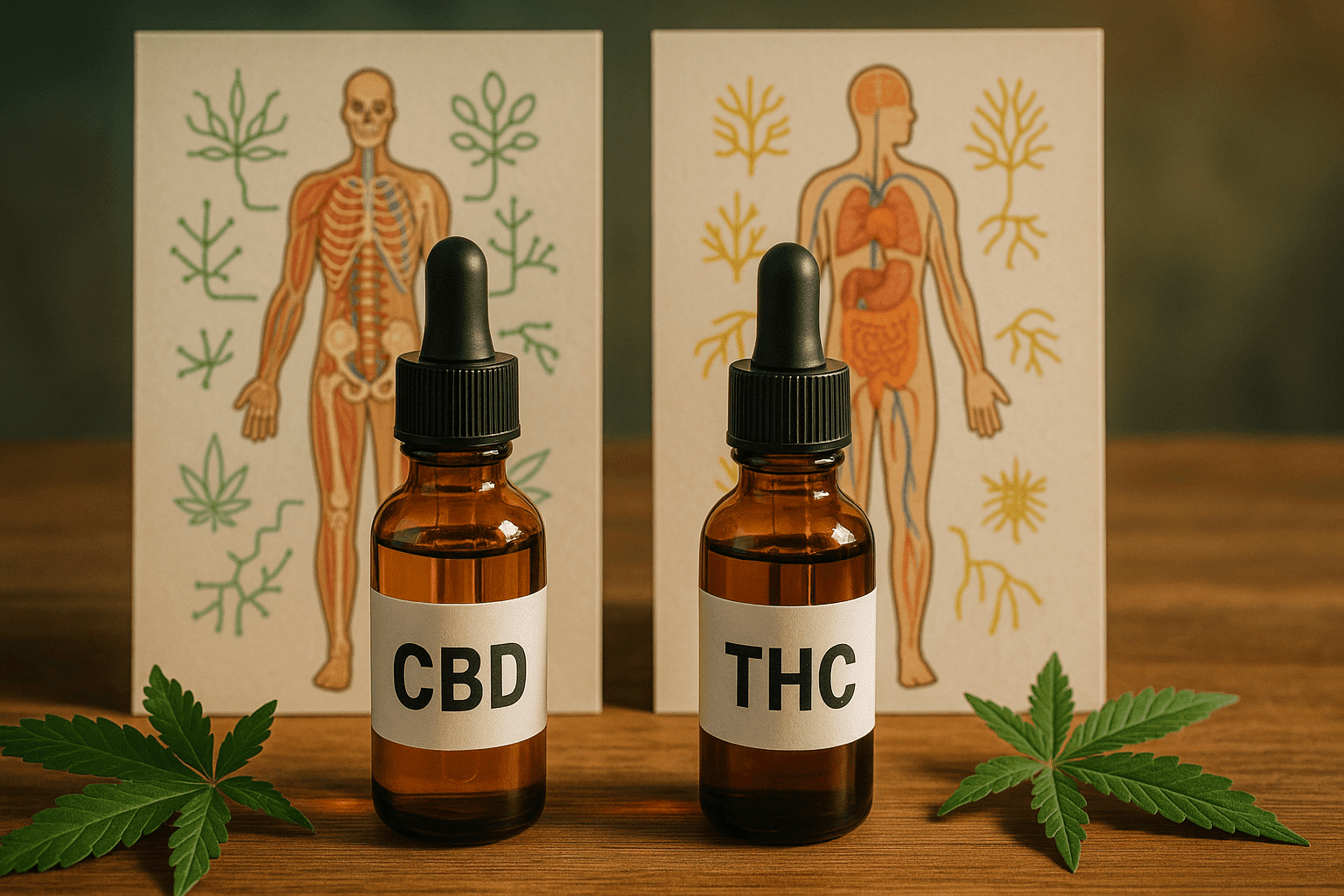
Lots of folks think of CBD and THC as if they’re like twins in the cannabis family. Sure, they come from the same plant and often show up together in products, but honestly, they feel more like cousins to me. They share some similarities, but once they get inside your body, their effects and personalities really part ways. This difference is clear in how they affect your mind, mood, and sense of balance.
When I first started learning about cannabis, the simple story I heard was that CBD was the relaxed, chill one and THC was the part that brought the high. Easy, right? But then I discovered they both work through the same system inside our bodies — something called the endocannabinoid system, or ECS for short. The ECS is all about keeping things in balance, like your sleep patterns, appetite, memory, and handling stress. Each cannabinoid interacts with this system differently, which is why taking CBD feels so different from taking THC.
How the Endocannabinoid System Works
You can think of the ECS as a low-key manager working behind the scenes. It doesn’t make a big fuss but helps your body bounce back to balance after things like stress or discomfort. It has these receptors called CB1 and CB2 — kind of like little doors that open when signaled. When cannabinoids enter your system, they basically knock on these doors, and your body reacts accordingly.
CB1 receptors are mostly found in the brain and nervous system, while CB2 receptors pop up more in the immune system and around the rest of your body. THC fits neatly into CB1 receptors, which helps explain a lot about its effects. CBD, on the other hand, doesn’t quite fit there, and that makes a big difference in how it behaves.
How THC Works in the Body
THC is the cannabinoid that most people know, mostly because it’s responsible for the classic cannabis high. It connects with those CB1 receptors in the brain, which leads to changes in mood, perception, appetite, and sometimes sparks creativity or focus. From what I’ve seen, people either love this change or might need some time to adjust, especially if they take more than what their body’s ready for — it can feel pretty intense.
Besides the high, THC can help stimulate appetite, ease certain types of discomfort, and even influence sleep quality. How it affects you really depends on your own body chemistry. Two people could take the exact same dose and have totally different experiences. That’s why the safest route is to start small and slowly find your sweet spot.
How CBD Works in the Body
CBD plays it a bit cooler. Unlike THC, it doesn’t bind to the CB1 receptors. Instead, it interacts with several systems in your body at once. It influences how your body reacts rather than creating a strong effect on its own. Many people describe CBD as calming or grounding. Usually, it won’t mess with your thinking or perception. Instead, it might soften tension, ease some kinds of discomfort, and help support a more natural calm.
What really surprised me was learning that CBD can actually lessen some of THC’s stronger effects. When both are taken together, CBD can tone down that intensity. Some folks prefer this mix because it lets them enjoy THC’s benefits without feeling overwhelmed.
The Key Differences Between CBD and THC
While both come from the same plant, CBD and THC behave quite differently. THC is psychoactive, which means it changes how you think and feel, whereas CBD doesn’t get you high. THC binds tightly to CB1 receptors in the brain, while CBD does not. THC usually causes a noticeable shift in perception, but CBD tends to keep things clear and steady.
Because of this, many people find CBD easy to add into their daily routine. They might use it for discomfort, sleep support, or just to feel balanced. THC, on the other hand, is often saved for deeper relief, boosting creativity, supporting appetite, or winding down at night. Neither one is better — they just serve different purposes, and the right pick depends on what you’re after.
How Your Body Chemistry Changes the Experience
One thing that really sticks out from all the people I’ve talked to is how personal the experience is. Two friends can take the same edible and end up feeling completely different things. This isn’t random at all — it’s all about your metabolism, stress levels, hormones, and even how well you slept the night before. The ECS aims to create balance, but each person’s balance is unique.
From what I’ve noticed, people who take cannabis with a bit of patience and curiosity usually have the best time. Starting with a small dose, jotting down how you feel, and adjusting slowly turns the process into something simple. It’s a bit like learning a new language — it takes time, but if you pay attention to the signs, it becomes clearer.
Taking CBD and THC Together
A lot of products these days combine CBD and THC. When they work together, it’s called the entourage effect. The idea is that cannabinoids boost each other, creating a more balanced and complete experience. CBD might reduce the intensity of THC, while THC could offer relief that’s stronger than CBD alone. This combo helps people find a middle ground that feels natural and steady.
Some folks go for products that are mostly CBD with just a touch of THC. Others prefer balanced gummies or oils with equal parts of both. In my experience, this blend often feels smoother than THC alone and more noticeable than CBD on its own. It’s a good fit for those who want support without tipping too far one way.
Potential Side Effects
Both CBD and THC are generally seen as safe, but side effects can happen. THC might cause dry mouth, red eyes, increased appetite, or occasional anxiety if taken in too high a dose. CBD sometimes leads to mild drowsiness or digestive changes, especially if you take a lot. Starting small helps avoid these problems and gives your body time to get used to things.
It’s also smart to check products for lab results. Third-party testing can show exactly how much CBD and THC you’re getting and if there are any contaminants. Most trustworthy brands share this info openly, which makes starting out a safer bet.
Which One Should You Choose
If you want something that’s calming without clouding your mind, CBD is usually a good choice. But if you’re after a more noticeable change or deeper relief, THC might suit you better. Some people use CBD during the day and save THC for nighttime. Others mix and match depending on how stressed they feel, how well they slept, or what their body needs.
There’s no one-size-fits-all answer. The best approach is to try a bit, pay attention to how you feel, and adjust slowly. I’ve seen folks find their perfect balance with anything from oils and gummies to flower or a mix of cannabinoids. Once you figure out how your body reacts, it gets a lot easier.
Final Thoughts
It’s not about CBD vs THC as a competition — it’s more about understanding two different tools from the same plant. Each brings something valuable and can support your body in unique ways. When you get how each one works, you can make choices that feel right for your mind and daily life. In my experience, people who listen to their bodies often find the most comfort and clarity.
As you explore different products, always remember that your body’s response is personal. What works well for someone else might not be exactly the same for you. Being curious, patient, and informed makes the whole journey smoother. Both CBD and THC have plenty to offer, and discovering your own balance is all part of the process.