
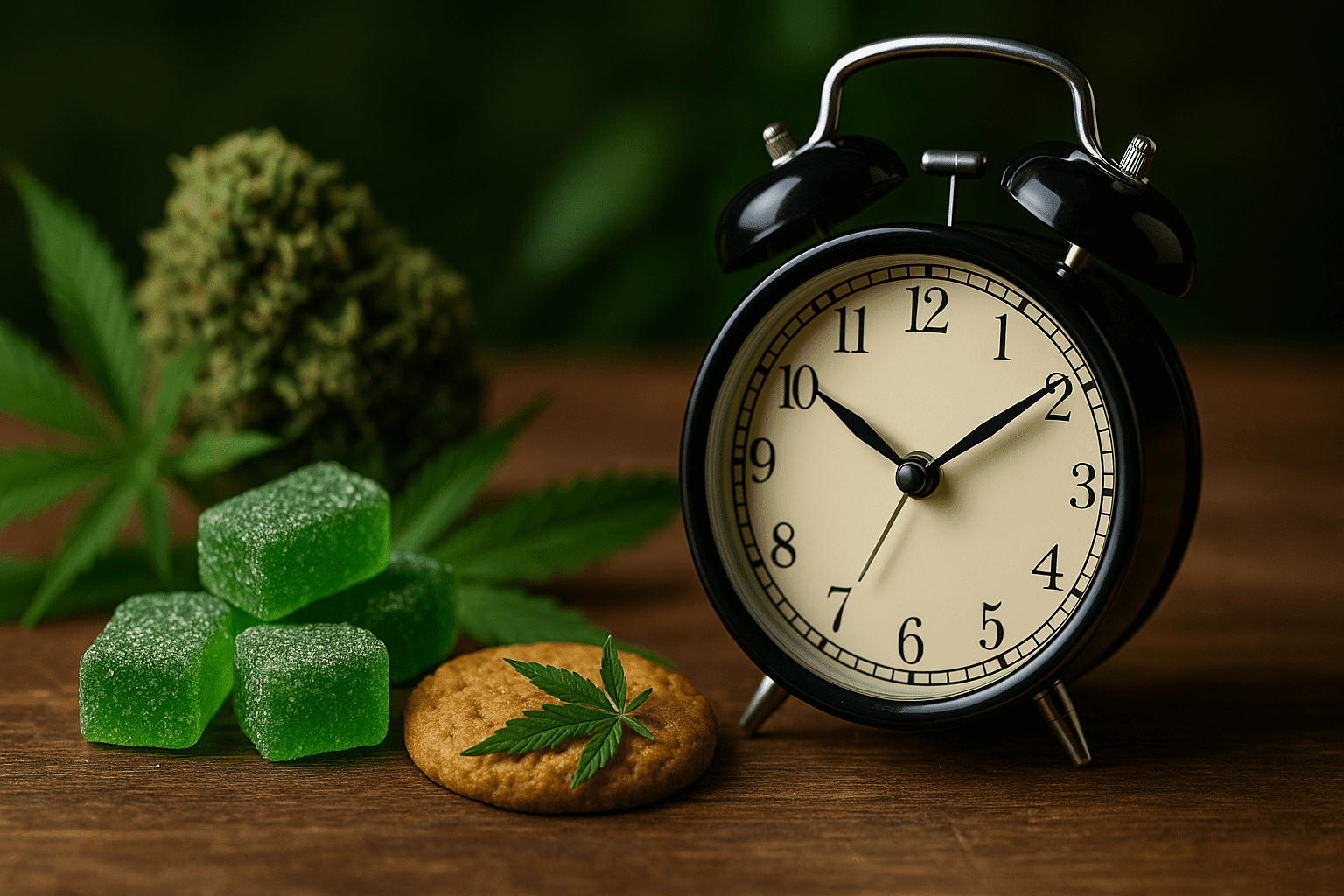
Edibles move at their own pace. You can eat a gummy and feel nothing for a while, then the effects start rolling in when you least expect it. I have seen so many people get caught by surprise because they assumed edibles should feel fast, the same way smoking does. The truth is that cannabis edibles follow a different path in your body. This guide will help you understand edible onset time, how the experience unfolds, and why patience always pays off.
Why Edibles Take Longer To Work
When you smoke or vape cannabis, the cannabinoids enter your bloodstream through your lungs. This gives you a quick and noticeable effect. Edibles take a slower road. Your body has to digest them, move them through your stomach and liver, and then convert THC into a stronger form called 11 hydroxy THC. This process takes time, and everyone’s timing is a little different.
I have watched friends feel nothing for an hour, decide to take more, then feel both doses hit them together. It is an uncomfortable situation, and it usually comes from not understanding how the edible process works. Most people want a simple answer for how long edibles take to kick in, but the honest answer is that it depends on your body, your metabolism, and what you ate before consuming the edible.
Average Edible Onset Time
Most people feel the first signs of an edible between 30 to 90 minutes. Some feel it sooner, and some take longer. I have met people who need almost two hours before anything happens. This wide range is normal. Eating an edible does not mean your body reacts on a timer. Think of it like waiting for water to boil. It gets there, but the moment it starts bubbling can be unpredictable.
Here is a simple breakdown of common timing:
- Fast onset: 20 to 40 minutes
- Typical onset: 45 to 90 minutes
- Slow onset: 90 to 120 minutes
Even within these ranges, there is no perfect prediction. Your digestive system plays a huge role in edible onset time. A full stomach, high body mass, or slow metabolism can delay the effects. An empty stomach or faster metabolism can make the effects show up sooner.
How Eating Habits Affect Edible Timing
One of the biggest factors I have seen is whether you eat the edible on a full or empty stomach. When people take an edible on an empty stomach, it usually hits faster and harder. When they eat a meal right before, the edible can take much longer to show up. Food creates a buffer that slows down absorption.
There is no right or wrong here. Some people like a slower onset because it feels gentler. Others prefer faster timing so they know what to expect. I usually tell people to keep it simple. Eat normally, avoid heavy and greasy meals right before taking an edible, and give your body time to work through the process.
How Dosage Impacts Onset And Intensity
Higher doses can sometimes feel like they kick in sooner, but that is not because the edible suddenly speeds up. It is because the moment it starts working, the feeling is strong and noticeable. Lower doses feel more gentle and steady, so the first signs might be easier to miss.
I have talked to many people who expected a big moment or a sudden shift, but edibles are usually smoother than that. The effects tend to grow slowly rather than arrive all at once. This steady climb is one reason many people prefer edibles for evening relaxation or for managing stress.
Why Everyone’s Edible Timeline Is Different
Two people can eat the same gummy at the same time and feel the effects at completely different moments. I have watched this happen many times. One person starts feeling it in forty minutes, while the other takes almost two hours. It does not mean the product is inconsistent. It simply shows how unique our bodies are.
Here are a few factors that shape edible onset time:
- Your metabolism speed
- Your weight and body composition
- Your recent meals
- Your tolerance level
- Your liver’s processing speed
Some people naturally process THC faster. Others convert it more slowly, which creates later but stronger effects. From what I have seen, any timeline within two hours is still completely normal.
How Long Edible Effects Last
Once edibles kick in, they last longer than inhaled cannabis. Most people feel the peak for two to four hours, and the full experience can last six to eight hours. Some feel a light afterglow even longer. The longer duration makes edibles a popular choice for nighttime use or for people who prefer steady relief throughout the day.
If you are new to edibles, it might surprise you how long the effects stay with you. The body holds on to 11 hydroxy THC longer than the THC from smoking. This creates a wave that rises, peaks, and then slowly fades. It is smoother than inhaling cannabis, but it demands patience.
Why You Should Never Redose Too Early
In my experience, the most common mistake is redosing before the first edible has fully kicked in. People feel impatient and think nothing is happening. Then suddenly everything hits at once. This is usually where uncomfortable experiences come from.
A simple rule is to wait at least two hours before taking more. Even if you feel nothing at the one hour mark, the effects might be just a few minutes away from starting.
Tips For Managing Your Timing Comfortably
Over time, you will learn how your body responds to edibles. Until then, a few small habits make the experience smoother and more predictable.
Start low and patient
If you are newer to edibles, begin with a small dose. Even 2.5 to 5 milligrams can be enough to feel relaxed without overwhelming your senses. Give it time, watch how your body reacts, and adjust on your next round.
Eat a light meal first
A heavy meal can slow things down too much. No meal at all can make things hit harder than you expect. A light snack strikes a good middle ground.
Stay hydrated
Hydration supports your metabolism and helps the body process cannabinoids. It does not speed up onset dramatically, but it supports a clearer and more comfortable experience.
Choose your setting wisely
Your environment affects how you feel during the onset. Pick a comfortable and relaxing place, especially if you are trying a new brand or dose.
Understanding Fast Acting Edibles
Some companies now make fast acting edibles. These use special technology that allows cannabinoids to enter the bloodstream more quickly. From what I have seen, they can start working in 10 to 20 minutes. While this sounds convenient, it does not replace traditional edibles. It is simply another option for people who want quicker timing.
Fast acting edibles use methods like nanoemulsion to break cannabinoids down into smaller particles. These absorb through the mouth and stomach more easily. If you try them, you will still want to start with lower doses because the shorter timeline can feel more immediate.
How To Know When The Edible Is Working
Most people notice a few early signs. A gentle warm feeling. A slight floaty sensation. A shift in mood or focus. These little signals often arrive before the stronger effects settle in. I find that paying attention to these early cues helps you better understand your personal edible onset time.
Once you know your body’s rhythm, your experiences become more predictable. You learn when to take an edible before a movie, before a walk, or before settling into your couch for a quiet night.
The Bottom Line On Edible Onset Time
Edible onset time varies from person to person. Most people feel the first signs between 30 and 90 minutes, but some need closer to two hours. Your body, metabolism, meals, and tolerance all shape the timeline. Understanding these patterns helps you enjoy edibles safely and comfortably.
If you keep your dose reasonable, give yourself time, and stay patient, the experience becomes much smoother. In my experience, edibles reward people who ease into them rather than rush the process. Near the end of the day, what matters most is learning how your body reacts and trusting that the effects will come. Edible onset time is less about the clock and more about listening to your own system.